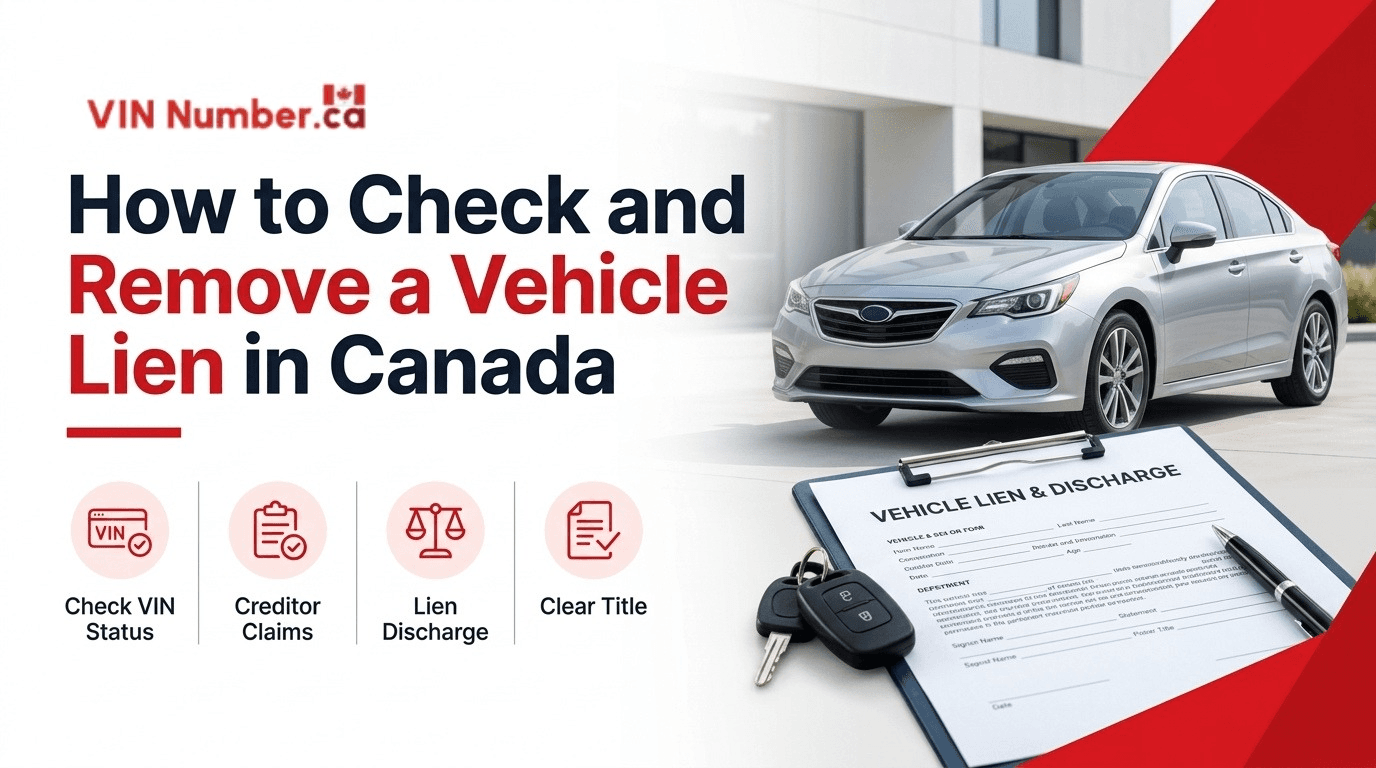
A vehicle lien or registered security interest can give a creditor a legal claim against the vehicle used as collateral. If you buy a vehicle with an unresolved security interest, the creditor may have rights against the vehicle even though you did not borrow the money. The buyer does not automatically become personally responsible for the seller's loan.
This guide tells you how a lien works, how to check for a lien and remove a vehicle lien.
Key Points:
- Liens are tied directly to the vehicle. That means you could buy a vehicle that remains subject to a creditor's claim.
- Paying off the loan doesn’t automatically clear the title, since the lender must file a formal discharge document to remove the claim completely from the public record.
- You can check for a lien status and available history with the Vehicle Identification Number (VIN) using a VIN check tool and pull the vehicle history records.
How to Check if a Car Has a Lien
To check if the car has a lien, you need the vehicle identification number (VIN) and a search of the correct provincial or territorial registry. A vehicle history report can provide additional context but is not a substitute for the official registry.
Step 1: Get the VIN
The VIN is generally a 17-character identification number made up of letters and numbers that can be found on the windshield (driver's side) or the driver's side door jamb. It also appears on the vehicle's service, ownership, and insurance papers.
Ask the seller for the VIN before you agree to a purchase.
Step 2: Search the Provincial or Territorial Registry
Each province and territory has its own personal property registry. Start with the personal property registry in the province or territory where the vehicle is currently registered. Also check other jurisdictions where it was previously registered or used, when relevant. A vehicle can have a lien registered in more than one province or territory.
For example, British Columbia and Alberta have Personal Property Registries, Ontario uses the Personal Property Security Registration system, and Québec uses the Registre des droits personnels et réels mobiliers (RDPRM). Check the appropriate registry for the vehicle's jurisdiction.
Read also: How to Register a Car in Ontario: Permit, Plates, Taxes and Requirements
Step 3: Consider a Vehicle History Report
A vehicle history report can show available lien information and other records, but it is not a substitute for the official registry. Use it as a supplementary check. VINNumber.ca's Vehicle History Report can help you see available lien records and other vehicle history details.
What a Lien Search Can and Cannot Show
A lien search by VIN finds claims recorded against that VIN. Registry searches and reports show recorded information only, so read a clean result as "no lien found", not as a guarantee.
Common Types of Vehicle Liens in Canada
Vehicle liens fall into two main categories: financing liens and mechanic's or repair liens. Other types, such as tax liens and judgment liens, can also exist. Understanding the type of lien helps you know who to contact and how to resolve it.
Financing Liens
A financing lien is registered when a lender takes a security interest in a vehicle to secure repayment. If the borrower defaults, the lender may have legal remedies that include repossession, subject to the agreement and applicable provincial law.
Mechanic's or Repair Liens
A repair or storage lien may arise when a service provider is owed money for work or storage involving a vehicle. The conditions for establishing, registering, and enforcing this type of claim differ by province. For example, British Columbia and Ontario have separate legislation governing these claims.
Other Types of Liens
Other legal claims may arise from unpaid taxes or court judgments. Their registration and enforcement procedures differ from ordinary vehicle financing liens. A standard VIN-based personal property search may not identify every type of claim, so check the relevant registry or authority when a specific concern exists.
How to Remove a Lien After Paying Off the Debt
Paying the debt does not automatically remove the lien. You must obtain a lien release or discharge and submit it to the registry. The process involves three main steps.
Step1: Contact the Lienholder
Start by identifying who holds the lien. It may be your lender, or the name may appear as the secured party on a registry search result. Then ask for a written payout statement that shows:
- the amount needed to pay the debt in full, and the date that figure is valid until
- how and where to pay
- what the lienholder will provide once it is paid, and how long it expects to take
Also ask whether any other claims are registered against the vehicle. A car can have more than one lien.
Step 2: Pay the Debt and Get a Payout Confirmation
Pay the outstanding debt to the lienholder. Request a written payout confirmation or receipt that shows the debt is paid in full. This document is essential for the next step.
Step 3: Obtain Written Confirmation and a Lien Release
After paying the debt, request written confirmation that the balance has been paid in full. Ask the lienholder when it will register the discharge and whether it will provide a release letter or other confirmation.
Keep the payout receipt and all correspondence.
Step 4: Confirm the Registry Has Been Updated
The lienholder is generally responsible for filing the required discharge or financing change statement for a registered financing security interest. The process varies by province and by type of claim.
After the expected processing period, search the appropriate registry again. Confirm that the registration has been discharged rather than relying only on a payment receipt or release letter.
What to Do if a Paid-Off Lien Still Appears
If the debt is paid but the registry still lists the lien:
- Check the dates. Allow for processing time and for any deadline that applies in your province.
- Contact the lienholder with proof of payment. Ask for the date the discharge was filed and its registration number.
- Put your demand in writing if the lienholder does not act.
- Get legal advice if it still is not resolved, or if the lienholder disputes that the debt is paid.
These are examples, not a universal procedure. Other provinces and territories have their own rules, so follow your registry's instructions.
What a VIN Search Adds
VINNumber.ca's VIN search will also include available lien records, vehicle brands, theft information, odometer readings, accident history, and ownership records. Depending on the vehicle, it may also include records from other provinces.
These records can help identify potential issues, but a commercial VIN report is not an official personal property registry search. It cannot remove, dispute, or legally discharge a lien.
If the report identifies a possible lien, confirm it through the appropriate provincial or territorial registry and contact the lienholder before completing the purchase.
Can Someone Put a Lien on Your Car Without You Knowing
Yes, it can happen. A lien is a legal claim against a vehicle, usually because money is owed. In most cases, you should receive notice when a lien is registered. However, notices can be missed, delayed, or sent to an outdated address.
How Can a Lien Be Placed on Your Vehicle?
There are several situations where a lien may be registered against a vehicle
Mechanic's or Repair Lien
If you leave your car at a repair shop for service or bodywork and fail or refuse to pay the bill, the shop can legally file a mechanic's lien against the vehicle for the cost of labor and parts. While you know the car is at the shop, you might not receive formal notice of the state filing until the lien is registered.
Storage or Towing Lien
If your car is towed and left in an impound or storage lot, daily storage and towing fees accumulate. The tow company can place a lien on the vehicle to recover those costs and may eventually auction it off.
Court-Ordered Claims
If a creditor takes legal action over an unpaid debt and obtains a court judgment, they may be able to enforce it against your assets, including your vehicle. The enforcement process depends on provincial or territorial law and may involve a writ of seizure and sale.
Tax or Government Debt
Unpaid state or federal taxes, parking tickets, or municipal fines can result in a government-imposed hold or lien registered electronically against your vehicle without a direct warning letter reaching your hands.
Fraudulent or Incorrect Lien Registrations
Fraudulent activity may also create concerns about unauthorized financing. If a lien appears on your vehicle unexpectedly, verify the registration details through the applicable provincial registry and contact the registering creditor to investigate.
What Happens If You Buy a Car With a Lien?
If you buy a car with an outstanding lien, the debt may remain attached to the vehicle even after ownership changes. The lender or lienholder may have legal rights against the car, which could put you at risk of losing the vehicle if the debt is not resolved.
According to the Financial Consumer Agency of Canada (FCAC), registered dealerships must ensure used vehicles have no outstanding liens before selling them. In some provinces and territories, private sellers must also disclose lien information before ownership transfers.
If the Car You Want Still Has a Lien
- Ask the seller to name the lienholder and provide a current payout statement.
- Ask for the lien to be cleared before you buy. FCAC's advice is to have the seller pay off the debt and remove the lien first, and to get written proof that both have happened.
- Agree on the process with the lender if the payout has to happen at the time of sale. Some buyers pay the lender directly for the amount owing, with the lender confirming the release in writing. For a high-value purchase, consider legal advice.
- Do not hand over the full price until the release arrangement is documented.
- Check the registry after the sale to confirm the discharge, and keep the release letter, payout receipt, and your bill of sale.
- Check every province where the car was registered. A car can have a lien in more than one province.
Buying a car that has a lien? Check the vehicle's lien records before you complete the purchase. Start a VIN search for the car.
Frequently Asked Questions About Car Liens in Canada
What is a lien on a car?
A lien is a legal claim registered against a vehicle to secure a debt. The lienholder has a right to the vehicle until the debt is paid. A lien follows the vehicle, not the owner.
How do I check for a lien on a car in Canada?
Get the VIN and search the provincial or territorial personal property registry where the vehicle is registered. A vehicle history report can provide additional information but is not a substitute for the official registry.
Can I sell a car with a lien on it?
You can sell a car with a lien, but the lien remains attached to the vehicle. The buyer may inherit the debt. It is best to pay off the lien and obtain a discharge before selling.
What happens if I buy a car with a lien?
If you buy a vehicle that remains subject to an enforceable security interest, the creditor may have rights against the vehicle even though you did not take out the original loan. Depending on the circumstances and applicable law, you could face enforcement action or lose the vehicle. You should resolve the lien before completing the purchase.
Can I check a car for liens for free?
Usually not completely. FCAC says a fee may apply to registry searches, and Saskatchewan's registry, for example, takes payment by credit card. VINNumber.ca's free VIN search decodes the vehicle's details, while lien records are part of its paid full report. Either way, a clean result means no lien was found in the records searched, not a guarantee.
Do I need a lawyer to remove a lien?
Often not, if the lienholder cooperates: you pay the debt, get the release, and confirm the discharge. Consider a qualified legal professional if the lienholder will not discharge a paid lien, the debt is disputed, or you bought a car that turns out to have a lien.