
VIN Check Quebec – See Past Vehicle Usage
Planning to buy a used car in Quebec? Be sure to check the vehicle’s history to avoid getting scammed or buying a junk vehicle. Get the vehicle history report by using our VIN check in Quebec to see complete car records!
As featured in




Shocking Vehicle-Related Stats to Know About Quebec
Road Accidents
Quebec recorded 28,233 people involved in road accidents in 2024, with 379 lives lost as a result.
Used Car Market Share
Quebec made up approximately 16.3% of Canada’s total used car listings and market share in 2025.
Vehicle Thefts
Auto theft in Quebec decreased in 2025, with reported vehicle thefts of 7,742 cases.
Why Do You Need a Quebec VIN Check?
Buyers
A VIN check is one of the easiest ways to run a background check before you decide to purchase a used vehicle in Quebec. It can help you see any vehicle’s history to ensure you do not end up with a bad vehicle with too many problems.
Accurate Vehicle Records
Check whether the vehicle has been involved in accidents, reported stolen, or has records of major damage in the past.
Verify Actual Mileage
Review recorded mileage information and compare it with the seller’s claims to spot possible odometer discrepancies.
Check for Title Issues
See whether the vehicle has title brands such as salvage, rebuilt, or other records that may affect ownership and resale value.
Examine Warranty Information
Review available repair and warranty details to see whether the vehicle received major repairs or still has active coverage.
What Information Can You Find With a VIN Check?
A VIN number check in Quebec provides the vehicle’s history that might not be disclosed during the discussion or manual inspection. With our VIN check service, you can get plenty of information such as specs, auction information, sales history, accident information, and more.
Vehicle Specifications
Review important factory details before buying. Check specifications, original equipment, and production information linked to the VIN.
Core Vehicle Configuration
Shows engine type, fuel type, drivetrain, transmission, trim, and factory equipment details.
Production and Identification Details
Displays model year, build details, and identification data for authenticity checks.
Vehicle Usage Records
Review previous ownership activity to understand how the vehicle was used and whether it experienced heavier wear over time.
Personal and Commercial Usage
Shows whether the vehicle was privately owned or used for fleet or business purposes.
Rental and Taxi History
Identifies past taxi or rental use that may suggest heavier mileage and usage.
Odometer Reading
Mileage records help verify the vehicle’s reported distance and identify possible inconsistencies in historical readings.
Recorded Odometer Entries
Displays mileage history with dates from inspections, registrations, and service records.
Rollback Detection Indicators
Flags unusual mileage changes that may indicate odometer tampering or reporting issues.
Accident Records
Accident history can reveal past collisions that may affect the vehicle’s condition, safety, and long-term reliability.
Accident Dates and Locations
List where and when reported accidents or incidents occurred.
Structural and Safety Indicators
Highlights damage affecting airbags, frame structure, suspension, or safety systems.
Damage Verification
Damage records help identify reported issues that may affect the vehicle’s performance or overall condition.
Collision and Structural Damage
Shows reported major or minor damage caused by collisions or impacts.
Fire and Environmental Damage
Displays flood, fire, hail, or salvage-related damage records.
Sales History
Check how many times the vehicle has been sold. This section helps you examine the vehicle condition better before buying.
Check the Sale Price
In this section, you can view the vehicle’s reported sale price from previous market listings or auctions. Compare past values and better understand the vehicle’s pricing history over time.
Check Vehicle Condition
Find out the condition the vehicle was previously sold in, including outstanding, clean, or rough condition ratings. Evaluate the vehicle’s past appearance and overall quality.
Warranty Status and Coverage
Warranty details help determine whether manufacturer or extended protection plans are still active.
Active Warranty Coverage
Shows remaining factory warranty, roadside assistance eligibility, and more. Examine the warranty validity and limitations.
Covered Systems and Components
List vehicle systems and components protected by active warranty coverage.
Auction Information
Check the complete auction information with the Quebec VIN check. It helps buyer and seller examine the vehicle condition if it was sold at an auction.
Overall Vehicle Information During Auction
See the complete vehicle information when it was auctioned. Check the auction date, location, status, and the final price of the vehicle.
Get Actual Auction Photos
Not only vehicle information, but you’ll also get up to ten actual photos of the vehicle when it was auctioned.
Theft Records
Check whether the vehicle was ever stolen. Make sure it is returned to its rightful owner so there will be no legal consequences in the future.
Stolen Date
Check the reported date of when the vehicle was stolen. This information can help buyers understand the timeline of the theft record and verify whether the incident was later resolved.
Stolen Location
See the reported location of the vehicle theft. Knowing where the incident happened may provide additional context about the vehicle’s theft history and recovery records.
Lien/Loan Records
Check if the vehicle is still tied to a lien/loan history. Examine this section carefully to ensure you do not hold yourself responsible for an unknown financial burden.
Loan Report
See whether the vehicle is still connected to an active auto loan or financing agreement. This helps identify possible unpaid balances that could affect ownership transfer or registration.
Lien Report
Check if the vehicle has been used as collateral under a lien agreement. Identifying an active lien can help buyers avoid unexpected financial or legal complications after purchase.
How to Run a VIN Search in Quebec?
Running a VIN check in Quebec and getting a vehicle history report is easy. You just need to follow these simple steps and get it done in less than a minute.
Step 1: Enter the VIN
Write down the VIN on the form above.
Step 2: Fill in the Form
Click the “Check VIN” to begin the process.
Step 3: Get the Report
Wait for seconds for the report to generate. Then, you can see the basic vehicle specifications, proceed to payment to secure the full vehicle history report.
Why Choose Our Quebec VIN Check?
Our VIN check service in Quebec is different from the other VIN check services available in the same area. Here’s what makes getting a car report with us better compared to other Quebec VIN number check services.
Accurate and Fast Result
We acquire the data from trusted Canadian sources to ensure its accuracy and reliability. The full vehicle history report will be generated within seconds!
Unlimited Lifetime Access
Our report does not expire after 30 days, unlike other reports that have expiration dates. You can access it anytime and anywhere.
Affordable
We offer the most affordable prices for single and bulk packages for the dealership. You can get a full vehicle history at a very affordable price.
Complete Report
Find complete vehicle records in our report, such as vehicle specs, accident history, and mileage.
Where Can I Find the Vehicle VIN Number?
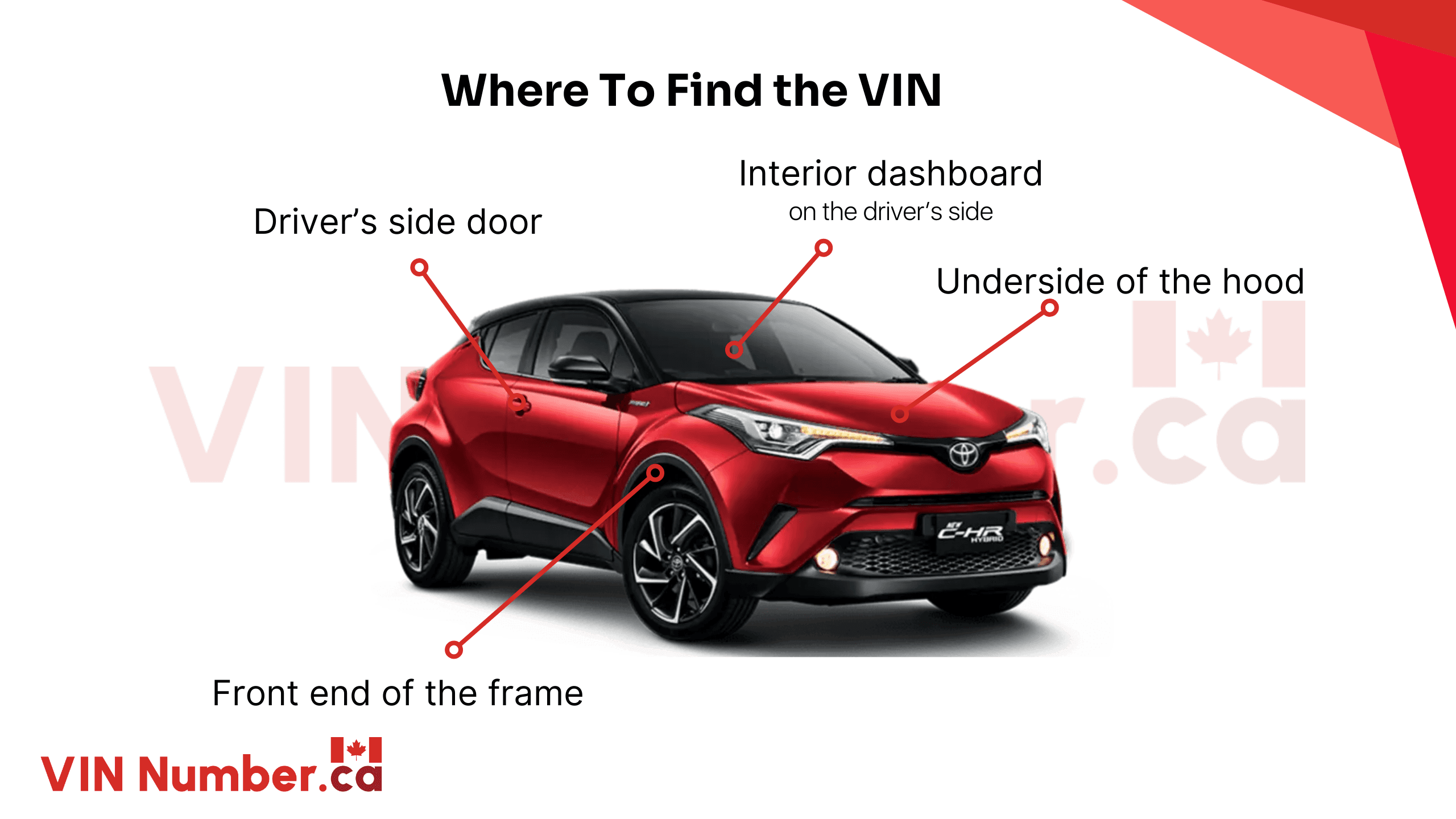
Finding a Vehicle Identification Number (VIN) is usually straightforward because manufacturers place it in visible and easy-to-access locations. Always compare the VIN on the vehicle with the VIN on official documents to help prevent VIN swaps or mismatched records.
- Driver’s Side Dashboard: Check the lower corner of the windshield on the driver's side. The VIN is usually displayed on a visible plate.
- Driver’s Side Door Jamb or Frame: Open the driver’s door and inspect the label or sticker attached to the door frame or latch area.
- Vehicle Registration and Insurance Papers: The VIN can also be found on ownership papers, registration documents, and insurance records.
- Engine Block or Firewall: Some vehicles have the VIN stamped directly onto the engine block or inside the engine bay firewall.
- Other VIN Locations: Check under the hood, under the spare tire area, or below the carpet near the driver’s seat.
Laws Related to Quebec VIN Check
Quebec has regulations related to vehicle history checks, ownership documentation, and title reporting. Reviewing these laws can help buyers and sellers better understand their responsibilities while avoiding unexpected registration, financial, or legal issues during a vehicle transaction.
Title Transfers in Quebec
Transferring a car title in Quebec costs about CAD 30 and takes around 15 minutes in person. You'll need ID, the original title, and forms signed by both buyer and seller.
Quebec Insurance and Registration
All drivers in Quebec must have at least CAD 50,000 in liability insurance. Extra coverage, like collision or theft, is optional but recommended. Proof of insurance is needed when registering the car.
Applying for a Title in Quebec
We also offer window stickers as an additional service. The window stickers show the original factory specifications, including the vehicle's options, features, and more, helping you ensure the vehicle's authenticity.
Avoid Surprises: Start Your Quebec VIN Check
Get detailed vehicle history records and make informed decisions before getting the vehicle! Don’t forget to run a complete background check.
FAQs on Quebec VIN Check
How do I check a car's history in Quebec?
To check a car's history in Quebec, simply enter the VIN (Vehicle Identification Number) into the VIN search tool on this page. You'll get vehicle specifications and the full history, including accident reports and title checks.
Is there a free VIN check in Canada?
Yes, you can access basic vehicle information like make, model, and year for free using our VIN decoder tool. However, more detailed reports that include accident history, odometer checks, and title information can be obtained with a small fee.
How to check a Canadian VIN number?
To check a Canadian VIN (Vehicle Identification Number), first locate the 17-digit code on the driver’s side dashboard, door jamb, or registration documents. Then, enter the VIN into the VINNumber.ca VIN check tool to access a complete vehicle history report with records such as accidents, floods, recalls, auctions, and more.
What is the best way to check a car's history?
The best way to check a vehicle’s history is by using its 17-digit Vehicle Identification Number (VIN) to run a full vehicle history report. This can reveal important details such as accident records, title status, mileage inconsistencies, and maintenance history.
Can I run my VIN to find car details?
Yes, you can use a 17-digit Vehicle Identification Number (VIN) to uncover detailed information about a vehicle. A VIN check can reveal factory specifications, vehicle details, and records.
How do I run a check on a VIN number?
To check a VIN (Vehicle Identification Number), locate the 17-character code on the dashboard, driver-side door jamb, or vehicle title. Enter the VIN into a free decoder service like VINNumber.ca to access the vehicle’s specifications, trim details, MSRP, country of origin, and current market value.
What is the best website for Canadian vehicle history reports?
VINNumber.ca provides complete vehicle history reports in Canada. You can get detailed VIN records, including important vehicle history information, for only CA$19.82 with no expiration date.