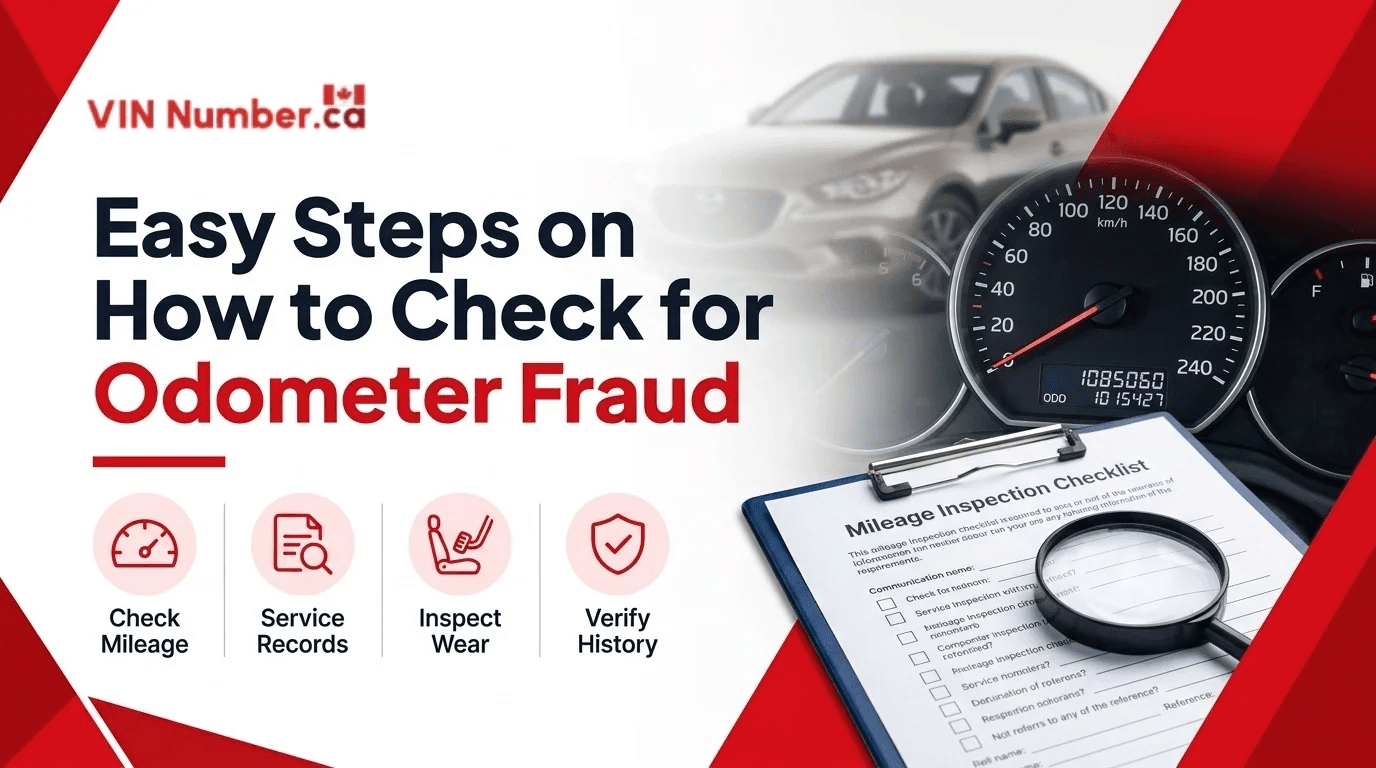
- Check mileage records: Compare the displayed mileage with available service and vehicle history records.
- Look for warning signs: Unusual interior wear, damaged displays, and inconsistent records deserve attention.
- Verify the VIN: Run a VIN check to review available vehicle history and reported odometer readings.
- Ask for supporting documents: Request maintenance invoices and inspection records from the seller.
- Get a professional inspection: Have a trusted mechanic check the vehicle before you buy.
Odometer fraud occurs when someone illegally alters a vehicle's odometer or misrepresents its recorded mileage. It can cause buyers to overpay for a vehicle and underestimate its wear, maintenance needs, or mechanical condition. Checking available mileage records before buying a used car in Canada can help identify inconsistencies.
In this guide, you’ll learn how odometer fraud works, how to spot it, and most importantly, how to check for odometer fraud before buying a car in Canada.
What is Odometer Fraud?
Odometer fraud, commonly called odometer rollback, involves illegally altering a vehicle's odometer or misrepresenting its distance travelled to make it appear less used than it actually is.
This tactic is used to make the car appear less used and better maintained, potentially increasing its selling price, sometimes even beyond its actual value.
If you think buying a car with a digital odometer is safe, well, sorry to tell you that it is possible to be rolled back, too. Sellers may use physical tools to roll back analog odometers or software to reprogram digital ones. Either way, the goal is to make the buyer believe the car has been driven less than it has.
In Canada, certain odometer alterations are offences under section 27 of the federal Weights and Measures Act. The law prohibits altering or adjusting a motor vehicle's odometer so that it displays a distance different from the vehicle's actual distance travelled. It also addresses odometer replacement when the replacement is not set to the correct distance, subject to a limited repair-related exception.
Why People Rollback Odometers and Why It's Illegal
It is sad to see that some people look up “How to Rollback Odometer” online, but you need to understand that tampering with an odometer is illegal, and it's never advised to do that. Even if you tried to roll back the odometer, it's still considered fraud.
Mechanical odometers, for example, can be physically rolled back, while digital odometers can be reprogrammed using electronic tools. Devices capable of reprogramming odometers are readily available, and online ads for odometer correction services exist.
Odometer replacement is another method; they used odometers with lower odometer readings that may be installed without setting them to the correct total distance.
Canadian Law on Odometer Tampering
Odometer tampering can mislead buyers about a vehicle's actual distance travelled and may result in legal consequences. Under section 27 of Canada's federal Weights and Measures Act, certain alterations, adjustments, and replacements of motor vehicle odometers are prohibited.
The rules can also involve provincial consumer protection and motor vehicle legislation. Buyers who suspect odometer tampering should keep relevant documents and contact the appropriate provincial authority or law enforcement agency.
For example, in Ontario, failure by an OMVIC-registered dealer to disclose that a vehicle's odometer does not reflect the true distance travelled is grounds for cancellation of a contract within 90 days of delivery. In Alberta, tampering with an odometer is illegal, but reporting an odometer reading is voluntary.
Read Also: Alberta Vehicle Inspection Checklist: Everything You Need to Know
Federal Offences Under the Weights and Measures Act
The Weights and Measures Act creates two main offences related to odometers:
- Altering or adjusting an odometer to show a distance other than the actual distance travelled
- Replacing an odometer without setting it to the correct total distance. Defences exist if the alteration or replacement was reasonably necessary for repairs and it was impracticable to reset the odometer correctly.
Provincial and Territorial Differences
Provincial regulators provide additional consumer protections. OMVIC in Ontario and AMVIC in Alberta license dealers and may investigate odometer complaints. Rules vary by province, so check the VIN with your provincial or territorial consumer protection office for specific requirements.
Odometer Fraud in Canada: How Big is the Problem?
While it's hard to pinpoint national records of odometer rollback, in Canada, odometer rollback is a serious crime, and it's occurring more often than usual. The provincial enforcement cases and consumer-protection warnings demonstrate that odometer reading misrepresentation remains a concern for used-car buyers.
The examples below illustrate reported cases and enforcement activity. They should not be interpreted as a measure of the total number of odometer-fraud incidents in Canada.
| Year | Location | Details | Number of Vehicles | Penalties/Outcome |
|---|---|---|---|---|
| 2024 | National | OMVIC charges against curbsiders (not all odometer fraud, but includes it). | 1,242 charges | 169 individuals charged |
| 2017 | British Columbia | An unlicensed dealer rolled back odometers on used vehicles. | 37 of 39 | $11,300 in investigation costs; no criminal charges. |
| 2002 | Cross-border | Ring indicted for rolling back odometers on vehicles exported to the U.S. | 122 | Federal indictments, up to 20 years in prison. |
These examples do not establish how many vehicles in Canada have tampered odometers each year. Buyers should take care with both private and dealership purchases. Ask for maintenance documents, compare available mileage records, and arrange an independent inspection before committing to a sale.
Read Also: BC Vehicle Inspection Checklist: Your Complete Guide
Signs of A Car With a Rolled-Back Odometer
Ever wondered how you’d know if the car is tampered with by the seller? There are a few steps to find out. Be alert if you find one of these signs before making a down payment.
Wear Inconsistent With Displayed Odometer Readings
If you see the seats, brake pedal, or steering wheel show heavy wear, but then you see the car has low odometer readings, be cautious, as it might be an early sign of odometer rollback.
Suspicious Service Records
Review any service or maintenance records. If the past service records show higher odometer readings than what’s currently displayed, it’s likely the odometer has been rolled back.
Misaligned Digits
If you plan to buy older models of the car, pay attention to the odometer (or, best, bring a magnifying glass with you) to see if the numbers are misaligned. If yes, then the car’s odometer has been rolled back.
Missing or Gapped History
Check for a complete vehicle history. Long gaps in maintenance or registration could mean the seller is hiding odometer manipulation. Review service records and registration documents for discrepancies.
Unrealistically Low Price
Sometimes, when something seems too good to be true, there’s a chance mischief is involved. Like a tampered odometer vehicle, the outside might look good, but a closer inspection could reveal serious and potentially dangerous problems.
How to Check if the Odometer is Tampered
You can check if the car’s odometer has been tampered with all by yourself. You just need the VIN to uncover the hidden information a car has before you decide to take it home.
Find the VIN
Before you decide to decode the VIN, you will need to find the VIN first. You may find the VIN in a few areas of the vehicle, like the driver’s doorjamb or engine block. You can also check the car’s registration document for convenience.
Run a VIN Check
With VINnumber.ca, you can decode the 17-digit VIN and get basic information, including the vehicle specifications and the available market value, for free. Proceed to payment and get the vehicle history report for any vehicle.
Verify the Recorded Odometer Data
Verify the recorded odometer, maintenance history, and more. You can download the vehicle history report and examine the car’s reported odometer readings and detailed information.
What to Do If You Suspect Fraud?
If a vehicle's displayed mileage does not match its available records, pause the purchase and investigate before proceeding.
- Pause the transaction: Do not rush into a purchase until the mileage discrepancy has been explained.
- Keep supporting documents: Save the advertisement, seller communications, maintenance invoices, inspection records, and photos of the odometer.
- Ask the seller for an explanation: Request documentation for any mileage discrepancy or odometer replacement.
- Arrange an independent inspection: Have a qualified mechanic inspect the vehicle and review available electronic or maintenance records where appropriate.
- Contact the relevant authority: Depending on your province and circumstances, report suspected misconduct to local police or the appropriate provincial consumer protection or motor vehicle regulator.
- Review available vehicle records: A VIN history report may help identify reported mileage inconsistencies, but it should be considered alongside other evidence.
Why Odometer Fraud is Dangerous
Odometer tampering is more than just a financial scam; It’s also a cheat code to get into accidents faster. Nobody wants to be involved in an accident with their new vehicle, including you.
If a car has 200,000 km but the odometer says 90,000 km, that means important parts like brakes, suspension, or timing belts may be long overdue for replacement. You could end up on the road in a vehicle that's unsafe and completely unreliable.
Final Thoughts on Odometer Fraud
Odometer fraud can cause you to overpay for a used car and overlook costly maintenance needs. Before buying, check the vehicle's available history, compare mileage records, and arrange an independent inspection. A VIN history report from VINNumber.ca can help you identify potential mileage discrepancies, but it cannot guarantee the vehicle's actual mileage.
Frequently Asked Questions on Odometer Fraud
What’s the best way to avoid odometer fraud when buying a used car?
Always ask for service records, run a VIN history report, and have the vehicle inspected by a trusted mechanic.
Is odometer fraud illegal in Canada?
Yes. It is illegal under both federal and provincial laws. Anyone found guilty of rolling back or tampering with a car’s odometer readings can face legal penalties.
Can digital odometers be rolled back?
Yes. Fraudsters can use specialized software to alter odometer readings, making digital systems just as vulnerable as analog ones.
What Is a Curbsider?
A curbsider is an unlicensed dealer who pretends to be a private seller. They often sell vehicles from residential streets or parking lots, avoid providing proper documentation, and may use multiple phone numbers or names. Curbsiders are not regulated by provincial bodies like OMVIC or AMVIC, so buyers have little protection if the vehicle has a rolled-back odometer.
Why would someone roll back an odometer?
Rolling back an odometer increases a vehicle's resale value by making it appear to have lower odometer readings. Curbsiders and dishonest private sellers may do this to sell high-odometer-reading vehicles at inflated prices.
Can a vehicle history report always detect odometer rollback?
No. A vehicle history report may or may not have the odometer reading, and reports are only as good as the data provided to them. A missing reading does not guarantee the odometer is accurate, and a report cannot detect all cases of rollback.