Key Takeaways
- Tire size is a code for width, sidewall height, construction, and wheel diameter. The load index and speed rating follow it but are separate.
- The correct size for your vehicle is on the driver’s door tire information label and in the owner’s manual. The sidewall shows what is installed now, which isn’t always the same.
- A window sticker by VIN lookup can help identify original wheel and tire equipment.
- Tire size can change with trim, wheel package, and options, so check your exact vehicle, not a generic chart.
You’re standing in a tire shop or browsing a used-truck listing, and you see a tire size such as P265/70R17. It may look like a technical code, but it describes the tire’s width, sidewall height, construction, and wheel diameter.
This guide will explain what tire size means, how to read it, where to find the right size for your vehicle, and how a window sticker by VIN shows the factory specifications.
What Does Tire Size Mean and Why Does It Matter
Tire size describes the dimensions and specifications of a tire, including its width, aspect ratio, construction type, and compatible wheel diameter. These measurements determine how a tire fits your vehicle and affect its handling, ride comfort, and overall performance.
Why Choosing The Correct Tire Size Matters
Manufacturers specify tire sizes for each vehicle configuration. The recommended size may differ between models, trim levels, and factory wheel packages. Installing an unsuitable tire size can cause problems such as:
- Handling: Incorrect dimensions can affect steering response, stability, and road grip.
- Speedometer accuracy: A significant difference in overall tire diameter can affect the speed displayed on your dashboard.
- Vehicle clearance: Tires that are too large may rub against the wheel wells or suspension components.
- Load capacity: A tire with an insufficient load rating may not safely support the vehicle's weight.
- Driving comfort: Different tire dimensions can change ride quality, road noise, and handling characteristics.
Canadian drivers should also consider seasonal conditions when choosing tires. Check the tire type, condition, load rating, and suitability for your vehicle before purchasing. Always compare replacement tires with the manufacturer's specifications rather than relying only on the size currently installed.
Where to Find the Tire Size for Your Vehicle
You can find tire size information in several places. Each one provides different information about the tires currently installed or the manufacturer's original recommendations.
1. Tire Sidewall
The tire sidewall is the easiest place to identify the size of your currently installed tires. Look along the outer surface of the tire for a combination of letters and numbers, such as P265/70R17.

Important: The sidewall shows the tire currently fitted to the vehicle. If a previous owner installed aftermarket tires, the marking may not match the original factory specifications.
2. Driver's Door Placard
The tire information label lists the manufacturer’s recommended tire size and inflation pressure. Transport Canada says it is usually on the driver’s door or inside the door frame, and that it can also be on the door post, the glove box or the fuel door.

The tire information placard typically provides:
- Recommended tire size
- Recommended cold tire inflation pressure
- Front and rear tire specifications, where applicable
- Other vehicle loading information
This is one of the most useful references when choosing replacement tires because it provides vehicle-specific recommendations from the manufacturer.
3. Owner's Manual
Your owner's manual explains the tire specifications and maintenance requirements for your vehicle. Depending on the manufacturer, it may include recommended tire sizes, inflation pressures, load ratings, and information about temporary spare tires.

If your vehicle has different tire specifications for different trims or wheel packages, check that the manual's information matches your particular configuration.
4. Window Sticker
The sticker lists the vehicle’s factory equipment and can include wheel and tire details. It also shows other manufacturer specifications besides the wheel and tire, package, options, and the Manufacturer Suggested Retail Price (MSRP).
Example: 2020 Ford F-150 Window Sticker and Factory Specifications
Consider the 2020 Ford F-150 sample window sticker recreated on VINNumber.ca.
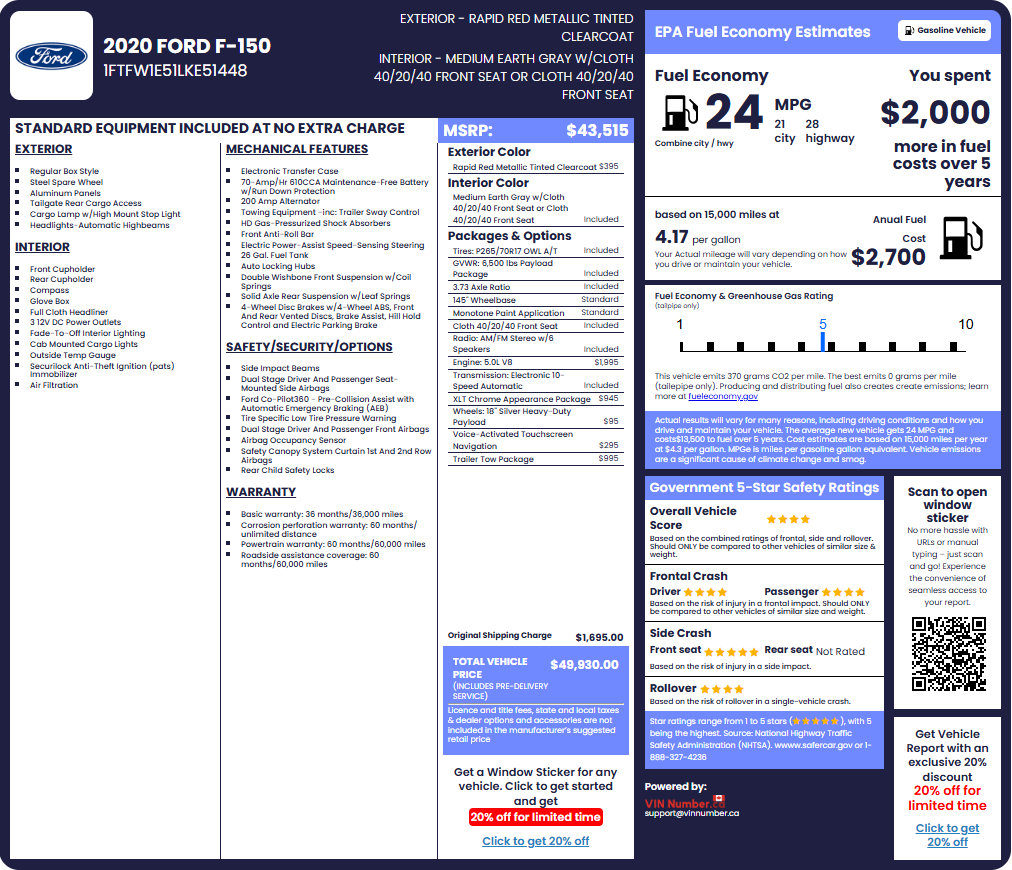
This example demonstrates how a vehicle's original equipment information is organized on a window sticker. For tire research, look for any listed wheel or tire specifications in the relevant equipment sections.
How to Read Tire Size Markings
A tire size like P265/70R17 on the window sticker sample contains several components. Each part provides specific information about the tire's dimensions and capabilities.
Breaking Down P265/70R17
The example P265/70R17 decodes as follows:
| Marking | Meaning | Explanation |
|---|---|---|
| P | Tire type | Indicates a passenger vehicle tire. |
| 265 | Section width | The tire is approximately 265 mm wide. |
| 70 | Aspect ratio | Sidewall height is 70% of the tire's width |
| R | Construction | Indicates radial construction. |
| 17 | Wheel diameter | Designed for a 17-inch wheel. |
Tire type (P)
The letter before the numbers says what kind of tire it is. Many pickups and vans use LT (light truck) tires, which are built for heavier loads, so don’t swap a P tire for an LT tire, or the reverse, without checking the placard.
Width (265)
The 265 is the tire’s width in millimetres. A wider tire isn’t automatically better. It has to suit the wheel the vehicle was designed for.
Aspect ratio (70)
The 70 means the sidewall is 70% as tall as the tire is wide. On a 265 mm tire, that’s about 186 mm of sidewall on each side. A lower number means a shorter sidewall.
Construction (R)
R stands for radial construction. It’s the letter you will see on most passenger and light truck tires you shop for.
Wheel diameter (17)
The 17 is the wheel diameter in inches, about 432 mm. It is the one number in the code that is not metric, and it has to match the wheel exactly.
Load Index and Speed Rating
The size is followed by two more characters, for example, P265/70R17 113S. They are not part of the size itself, which is why two tires with the same 265/70R17 size are not automatically interchangeable.
| Marking | Meaning | Explanation |
|---|---|---|
| 113 | Load index | Indicates the tire's rated load-carrying capacity. |
| S | Speed rating | Indicates the tire's rated maximum speed under specified conditions. |
Load index
The load index is a two- or three-digit number that shows how much weight one tire can carry at its maximum pressure. A load index of 113 corresponds to 1,150 kg per tire.
Speed rating
The speed rating is a letter that shows the maximum speed the tire is rated for. An S rating corresponds to 180 km/h.
How to Check Tire Size Specifications Using a VIN
A VIN doesn’t contain the tire size, but it identifies the exact vehicle the manufacturer built, and that opens the door to its original equipment list. A window sticker lookup by VIN can show factory wheel and tire details.
How Does a VIN Help Identify Original Tire Specifications?
A VIN can help identify the vehicle's original configuration, including its model, trim, and factory-installed equipment. These details matter because tire specifications can vary depending on:
- Vehicle model and model year
- Trim level
- Factory wheel package
- Optional equipment
- Front and rear wheel configurations
For example, two versions of the same pickup truck may have different wheel and tire specifications because they were built with different factory packages. A recreated window sticker can help narrow down the original configuration by providing the tire size by VIN.
How to Get a Window Sticker by VIN
You can use VINNumber.ca to get the recreated window sticker information for your vehicle. Follow these steps:
1. Find the 17-character VIN
It is on the dashboard on the driver’s side, where it shows through the windshield, and on the driver’s door jamb. It also appears on the registration and insurance documents.
2. Enter it into the window sticker lookup
Type the VIN into the window sticker lookup tool. The tool is a paid service that recreates the vehicle’s original equipment details when the records are available.
3. Read the equipment and options
Look through the standard equipment and the optional packages for wheel and tire details. Then compare them with the door placard and the tires on the vehicle. You can also check factory options by VIN to see what packages the vehicle left the factory with.
What if the vehicle is older?
Older vehicles have their own lookup. If you are checking a classic, the classic window sticker covers vehicles with older identification numbers, including vintage vehicles with 5-digit to 14-digit VINs.
Conclusion on Vehicle's Tire by VIN
Reading a tire size takes a minute once you know the order: type, width, aspect ratio, construction, wheel diameter, then load index and speed rating.
Finding the right size for your own vehicle means looking at the door placard. And when you need to know what the vehicle left the factory with, whether you are buying used or replacing tires, the window sticker is the document to check.
Frequently Asked Questions About Tire Size
What Do the Three Numbers Mean on Tire Size?
The three main numbers in a tire size describe its width, aspect ratio, and wheel diameter. For example, in P265/70R17, the three numbers are the width in millimetres (265), the aspect ratio (70), and the wheel diameter in inches (17). The letters give the tire type (P) and the construction (R).
Where Can I Find the Tire Size on My Car?
You can find the current tire size printed on the tire sidewall. Check the tire information label on the driver’s door or door frame, then the owner’s manual. The sidewall shows what is installed now. A window sticker can also provide factory wheel or tire specifications.
Can a VIN Tell Me the Original Tire Size?
A VIN alone does not always reveal tire specifications. A window sticker lookup by VIN can provide original factory tire specifications where available. VINNumber.ca's Window Sticker service recreates the sticker for this purpose.
Does Tire Size Vary by Trim Level?
Yes. Different trim levels may have different wheel packages, optional equipment, and tire specifications. Two vehicles from the same model year can therefore have different original tire sizes. Always check the specific vehicle's door placard and manufacturer's documentation.
Can I Install a Different Tire Size on My Vehicle?
A different tire size may be possible if it is an approved alternative for your vehicle. Check the manufacturer's recommended tire sizes and confirm that the replacement meets the required load capacity and speed rating. If you're unsure which alternatives are approved, consult a tire professional.
Is the Tire Size on the Sidewall the Original Factory Size?
Not necessarily. The sidewall shows the size of the tire currently installed. If a previous owner changed the wheels or tires, the marking may differ from the original factory specifications. Compare it with the driver's door placard, owner's manual, or available factory records.
What Is the Difference Between Tire Size and Wheel Size?
Tire size describes the tire's width, aspect ratio, construction, and compatible wheel diameter. Wheel size refers to the dimensions of the wheel itself.
Are the load index and speed rating part of the tire size?
No. They follow the size and are separate. Both have to meet the vehicle manufacturer’s requirements, so match them as well as the size.
Where Can I Check My Vehicle's Original Wheel Specifications?
Start with your owner's manual and manufacturer's documentation. You can also use a VIN-based window sticker lookup to check available original equipment information, including wheel specifications where listed.