
Nova Scotia VIN Check – Examine Damage History
Many vehicles on the market in Nova Scotia have hidden histories, from accidents to major repairs. Use the Nova Scotia VIN check and get a vehicle history report to check records like service, maintenance, accident, and more!
As featured in




Why Checking VIN in Nova Scotia is Important
Vehicle Collisions
In 2025, Nova Scotia recorded 76 fatal vehicle collisions, resulting in a total of 87 deaths.
Odomeeter Records
The average used car in Nova Scotia generally records around 64,249 km on its odometer.
Vehicle Sales
Each year, the used vehicle market in Nova Scotia records approximately 45,000 to 50,000 vehicle sales.
Why a Nova Scotia VIN Check Matters
Buyers
A vehicle history report helps buyers review important records before purchasing a used car and avoid unexpected problems later.
Know the Vehicle’s History
Review accident records and reported damage linked to the vehicle.
Verify Mileage Accuracy
Check mileage records and compare them with the seller’s claims.
Check Recalls and Warranty Status
See whether the vehicle has open recalls or active warranty coverage.
Check Theft Records
Confirm the vehicle has not been reported stolen before purchase.
What Details Can You Find With a VIN Check in Nova Scotia?
A Nova Scotia VIN number check shows important vehicle records that may not appear during inspections or seller discussions. Reviewing complete vehicle details helps buyers avoid hidden issues and make more informed decisions.
Vehicle Specifications
Check the complete vehicle specifications, original equipment, and production details linked to the vehicle through its VIN.
Core Vehicle Configuration
Shows engine type, transmission, fuel type, drivetrain, trim level, and factory-installed equipment linked to the VIN.
Production and Identification Details
Displays model year, manufacturing information, and identification details used to verify authenticity and confirm vehicle specifications.
Vehicle Usage Records
Ownership and usage records help explain how the vehicle was used and whether it may have experienced heavier wear over time.
Personal and Commercial Usage
Shows whether the vehicle was privately owned or previously used for commercial, business, or fleet-related purposes.
Rental and Taxi History
Identifies previous rental or taxi usage that may indicate higher mileage and increased long-term wear.
Odometer Reading
Mileage records help verify vehicle distance history and identify unusual changes across previous inspections and reports.
Recorded Odometer Entries
Displays mileage history with reporting dates from registrations, inspections, and vehicle servicing records.
Rollback Detection Indicators
Flags unusual mileage drops or inconsistent records that may suggest possible odometer tampering concerns.
Accident Records
Accident history may reveal previous collisions that affect the vehicle’s safety, condition, and future reliability.
Accident Dates and Locations
Lists when accidents happened and where incidents were officially reported or documented.
Structural and Safety Indicators
Highlights damage involving airbags, suspension systems, frame structures, and other safety-related components.
Damage Verification
Damage records help identify reported incidents that may impact the vehicle’s condition, performance, or value.
Collision and Structural Damage
Shows major or minor damage caused by collisions, impacts, or structural-related incidents.
Fire and Environmental Damage
Displays flood, fire, hail, and other environmental damage records linked to the vehicle.
Sales History Report
See how many times the vehicle has changed hands. Reviewing its sales history can give a clearer picture of ownership patterns and help assess the reliability and usage.
Check the Sale Price
View the vehicle’s reported sale prices from past listings or auctions. Comparing previous prices helps buyers understand market trends and evaluate whether the current asking price is reasonable.
Check Vehicle Condition
Discover the condition the vehicle was in during previous sales, including ratings like outstanding, clean, or rough. This information helps buyers gauge the car’s past appearance, maintenance, and overall quality.
Auction Information
Auction data can help buyers and sellers better understand the vehicle’s past condition, pricing history, and the vehicle’s status when it was sold at an auction.
Overall Vehicle Information During Auction
Access auction details, including the sale date, auction location, vehicle status, and final selling price. These records can provide better insight into the vehicle’s market history and condition.
Get Actual Auction Photos
View up to ten real auction photos showing the vehicle’s condition at the time of sale. These images help identify visible damage or past modifications.
Warranty Status and Coverage
Warranty information helps determine whether manufacturer or extended protection plans are still active.
Active Warranty Coverage
Shows remaining factory warranty, roadside assistance eligibility, and available protection coverage details.
Covered Systems and Components
List systems and components currently protected under active manufacturer or extended warranty programs.
Theft Records
Check whether the vehicle has ever been reported stolen. Theft records can help buyers verify the vehicle’s legal status and avoid potential ownership or registration complications in the future.
Stolen Date
Review the reported date of the theft incident to better understand the vehicle’s theft timeline and determine whether the case was later resolved or recovered.
Stolen Location
See where the theft was originally reported. This information may provide additional context about the incident and help support the vehicle’s history records.
Lien/Loan Records
Check whether the vehicle has an active loan or lien history attached to it. Reviewing these records can help buyers avoid unexpected financial obligations after purchase.
Loan Report
Find out if the vehicle is still connected to an active financing agreement or an unpaid auto loan that could affect ownership transfer or registration.
Lien Report
See whether the vehicle has been used as collateral under a lien agreement. Identifying an active lien can help prevent future legal or financial disputes.
How to Use a Nova Scotia VIN Check
If you live in Nova Scotia, getting a vehicle history report is easy. Use our VIN check in Nova Scotia service and get the vehicle information history report in less than a minute.
Step 1:Enter the VIN
Click on the form above and write the VIN.
Step 2: Fill in the Form
Then, click the “Check VIN” button to submit the form and begin the process.
Step 3: Get the Report
Check the preview page, where you can see complete specs and market value. Then, proceed to payment to get the full vehicle history report.
Why Use Our Nova Scotia VIN Check?
A Nova Scotia VIN check provides more than basic vehicle details. Access important records and information that help buyers and sellers make better decisions before any deals are made.
Fast and Accurate Results
Get vehicle reports in under a minute using reliable information gathered from trusted Canadian data sources.
Unlimited Report Access
Your report never expires, allowing you to review vehicle information again whenever needed in the future.
Affordable Pricing
Access detailed vehicle reports at competitive prices, with bulk pricing options available for dealerships and businesses.
In-Depth Vehicle Reports
Review detailed records, including specifications, mileage history, accident reports, title records, and other important vehicle information.
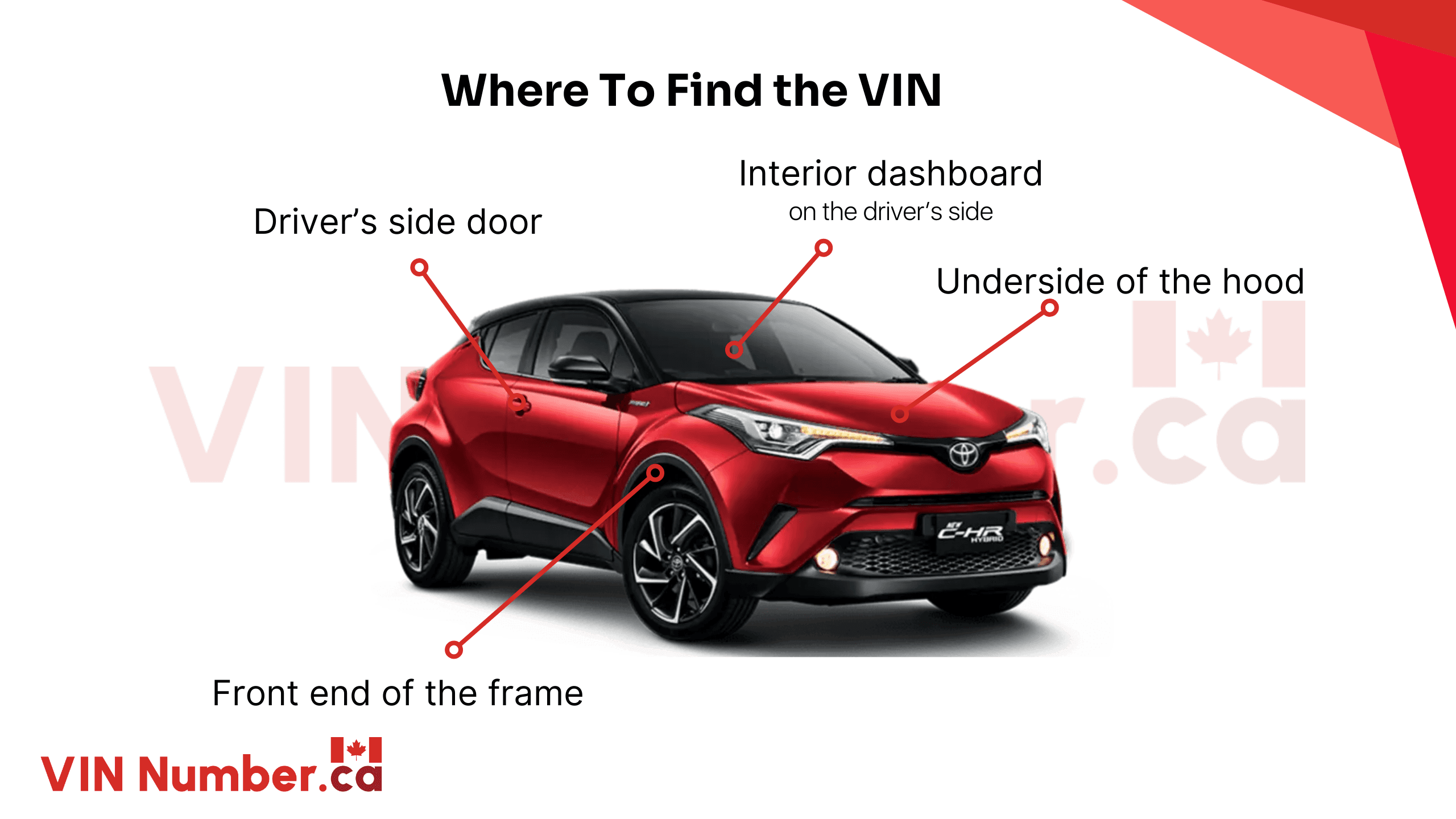
Where Can I Find the Vehicle VIN Number?
Finding a Vehicle Identification Number (VIN) is usually simple because manufacturers place it in easy-to-access locations. Remember to compare the VIN on the vehicle with the one on the official paperwork to avoid a VIN swap.
- Driver’s Side Dashboard: Look through the lower corner of the windshield on the driver’s side to find the VIN plate.
- Driver’s Side Door Jamb or Frame: Open the driver’s door and check the label or sticker attached to the door frame or latch area.
- Vehicle Registration and Insurance Papers: Check the ownership documents, registration papers, and insurance records.
- Engine Block or Firewall: Some vehicles have the VIN stamped directly onto the engine block or on the firewall inside the engine bay.
- Other VIN Locations: Less common spots include beneath the hood, under the spare tire, or beneath the carpet near the driver’s seat.
Laws on Nova Scotia Car History Check
Nova Scotia has its own rules and regulations regarding vehicle registration and ownership transfer that all buyers and sellers should know about.
Title Transfer in Nova Scotia
Transferring a vehicle title in Nova Scotia costs about $15 and takes around 30 minutes at a Service Nova Scotia location. You’ll need a bill of sale, a valid ID, and a signed transfer form from both buyer and seller.
Nova Scotia Insurance Registration
All drivers must carry insurance with at least $200,000 in liability coverage. Additional coverage is available for extra protection. Proof of insurance is required when registering a vehicle.
Applying for Titles in Nova Scotia
To register a title, submit an application form, proof of ownership, and a bill of sale. Vehicles from other provinces may require an inspection before registration is completed.
FAQs About Nova Scotia VIN Check
Can you check a VIN to see if it is stolen?
Yes, you can quickly check whether a vehicle has been reported stolen by using its 17-digit Vehicle Identification Number (VIN). Enter the VIN above to begin checking available theft-related records.
What is the website for Canadian vehicle history reports?
VINNumber.ca is one of the main platforms for accessing detailed Canadian vehicle history reports. Other free and official resources may also be available depending on the type of information needed.
Can I use a VIN to find car details?
Yes, a Vehicle Identification Number (VIN) can be used to access important vehicle information, including specifications, recall records, theft status, and historical data.
Can I check a VIN number for free?
Yes, you can check a VIN for free, although the information available depends on the service used. Free VIN tools usually provide basic specifications, trim details, and estimated market value. Use our VIN decoder to decode a VIN for free.