Buying a used vehicle in Alberta? Registering a car from another province? You will likely need a vehicle inspection. This guide walks you through everything you need to know. We cover the full Alberta vehicle inspection checklist, the required forms, and the steps to take before you pay a single dollar for inspection.
What Is an Alberta Vehicle Inspection?
An Alberta vehicle inspection is a safety check. A licensed inspection station examines your vehicle. They check major systems like brakes, tires, lights, and steering. The goal is simple. They want to confirm your vehicle is safe to drive on Alberta roads.
This inspection is different from a regular maintenance checkup. It is a formal process. It follows a set checklist approved by the province. Once your vehicle passes, you get an official inspection certificate. You need this certificate to register or transfer ownership in certain situations.
When Do You Need a Vehicle Inspection in Alberta?
Not every vehicle owner in Alberta needs an inspection. It depends on your situation. Here are the most common cases.
- You are bringing a vehicle into Alberta from another province or country. This is called an Alberta out-of-province inspection.
- You are registering a rebuilt or salvage vehicle.
- Your vehicle was written off by an insurance company and later repaired.
- You are registering a vehicle that has never been licensed in Alberta before.
- A police officer or peace officer has ordered an inspection due to a safety concern.
If none of these apply to you, you likely do not need a mandatory inspection. Alberta does not require routine annual inspections for personal vehicles. This is different from some other provinces. Still, many buyers choose to get a voluntary inspection before purchasing a used car. It gives peace of mind.
Why the Alberta Out-of-Province Inspection Matters?
If you moved to Alberta from another province, this step applies to you. Vehicles registered outside Alberta must pass an out-of-province inspection before you can get an Alberta registration and license plate.
This rule protects buyers and the province. It confirms the vehicle meets Alberta's safety standards. It also helps verify the vehicle's identity using the Vehicle Identification Number (VIN).
The inspection must be done at a licensed inspection facility. You cannot get this done at just any mechanic shop. Alberta Transportation must authorize the facility.
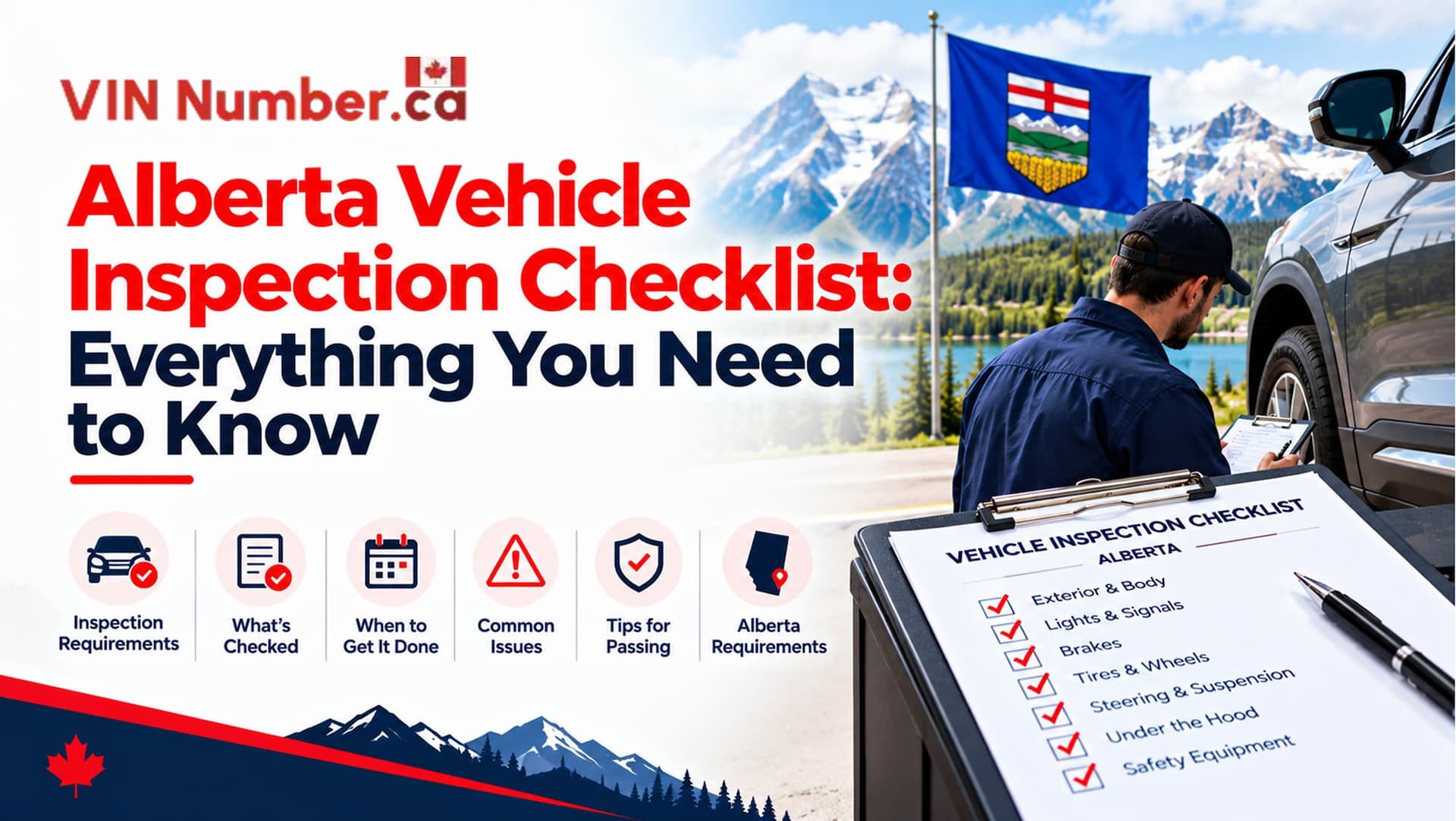
Alberta Vehicle Inspection Checklist: What Gets Checked
Understanding the checklist helps you prepare. It also helps you avoid surprises and extra costs. Here is a breakdown of what inspectors typically look at.
Braking System
- Brake pedal function and reserve
- Parking brake operation
- Brake lines and hoses for leaks or damage
- Brake pad and rotor condition
Steering and Suspension
- Steering wheel play and alignment
- Power steering fluid and function
- Shocks and struts
- Ball joints and control arms
Tires and Wheels
- Tire tread depth
- Tire condition and matching sizes
- Wheel bearings
- Rim damage or cracks
Lights and Electrical
- Headlights, taillights, and brake lights
- Turn signals and hazard lights
- Dashboard warning lights
- Battery condition and connections
Frame and Body
- Frame rust or damage
- Doors, hood, and trunk latch properly
- Windshield cracks or chips
- Seatbelt function
Exhaust and Emissions
- Exhaust system leaks
- Muffler condition
- Emission control components
This checklist gives you a solid idea of what to expect. Bring your vehicle in good working condition. This improves your chances of passing on the first try.
Check the Vehicle History Before You Pay for Inspection
Here is a step many buyers skip. It is one of the most important steps in this entire process.
Before you pay for a provincial inspection, check the vehicle's history report. Inspections cost money. Some vehicles fail simply because of hidden problems that a history report could have flagged early. Others may have salvage titles, odometer rollbacks, or past accident damage.
Use a VIN Check Tool First
This is where a VIN check becomes valuable. Before booking an inspection appointment, run the vehicle's VIN through a trusted lookup tool.
Simply enter the 17-digit VIN. Within moments, you get a detailed report on the vehicle's history. This single step can save you significant time and money. It helps you avoid inspection fees on a vehicle that may not be worth buying at all.
What a Vehicle History Report Includes
A vehicle history report compiles data from multiple official sources. Here's what you can typically find in one:
Accident History
Shows whether the vehicle has been involved in reported collisions and may reveal the extent of any recorded damage.
Salvage and Rebuilt Status
Indicates whether the vehicle was declared a total loss by an insurance company and later rebuilt for road use.
Odometer Readings
Tracks odometer readings over time to help identify potential odometer rollback fraud or inconsistencies.
Title Records
Provides ownership history and can reveal important title issues, including active liens.
Theft Records
Checks whether the vehicle has ever been reported stolen or recovered.
Registration History
Shows where the vehicle has been registered, including previous provinces, territories, or states.
Manufacturer Recalls
Lists any open safety recalls associated with the vehicle's VIN that may require attention.
This information gives you a clear picture. A clean report is a good sign. A report showing major accidents or salvage status is a red flag. It does not always mean you should walk away. It does mean you should ask more questions and possibly negotiate the price.
Benefits of Running a Vehicle History Report
Many buyers underestimate the value of a vehicle history report. Here are some of the key benefits it can provide.
Saves money
You avoid paying inspection fees on a vehicle with serious hidden issues.
Saves time
You skip scheduling inspections for vehicles that are clearly bad matches.
Protects against fraud
Odometer rollbacks and salvage titles are more common than most buyers realize.
Supports negotiation
A report showing prior damage gives you leverage to negotiate a lower price.
Builds confidence
You move forward with the purchase knowing the full picture.
Think of the VIN check as your first line of defense. The provincial inspection checks the vehicle's current mechanical condition. The history report checks its past. You need both pieces of the puzzle before making a confident decision.
Step-by-Step Guide: How to Prepare for Your Alberta Vehicle Inspection
Follow these steps in order. This keeps the process smooth and avoids wasted trips.
Step 1: Confirm You Actually Need an Inspection
Check if your situation falls under the required categories. Out-of-province registration, salvage titles, and rebuilt vehicles all require one. If you are unsure, contact an Alberta registry agent to confirm.
Step 2: Run a VIN Check Before Anything Else
Before scheduling any appointment, check the vehicle's history. Use the VIN check tool to review accident history, salvage status, and odometer records. This step comes first for a reason. It protects you from wasting money on a vehicle that may not pass.
Step 3: Review the Alberta Vehicle Inspection Checklist
Go through the checklist sections above. Inspect the tires, lights, brakes, and body yourself. Fix small issues in advance. A burnt-out bulb or worn wiper blade is an easy fix. These small fixes can prevent an automatic failure.
Step 4: Locate a Licensed Inspection Facility
Not every mechanic can perform this inspection. Search for facilities authorized by Alberta Transportation. Many registries and licensed repair shops offer this service.
Step 5: Gather Your Documents
Bring the following to your inspection appointment.
- Vehicle registration or bill of sale
- Proof of ownership
- Valid identification
- Out-of-province documents, if applicable
Step 6: Complete the Alberta Vehicle Inspection Form
The inspection station fills out the official Alberta vehicle inspection form during the appointment. This form records the results of each checked component. Keep a copy for your records. You will need it when registering the vehicle.
Step 7: Book Your Appointment
Call ahead. Some facilities have long wait times, especially during busy seasons. Booking early avoids delays in your registration process.
Step 8: Attend the Inspection
Arrive on time. The inspector will examine the vehicle based on the checklist. This usually takes between thirty minutes and an hour, depending on the facility and vehicle condition.
Step 9: Review the Results
If your vehicle passes, you receive a certificate. If it fails, the inspector provides a list of required repairs. You can fix the issues and return for a re-inspection.
Step 10: Complete Your Registration
Bring your passed inspection certificate to a registry agent. This completes your vehicle registration process in Alberta.
How Much Is a Vehicle Inspection in Alberta
Inspection costs vary by facility. Prices typically range from around 100 to 150 dollars for a standard out-of-province inspection. Salvage and rebuilt inspections tend to cost more. These can range from 150 to over 300 dollars, depending on the complexity of the inspection required.
Prices are not set by the province. Each licensed facility sets its own rate. It is worth calling a few locations to compare pricing before booking.
Knowing common failure points helps you prepare better. Here are frequent issues that cause a failed inspection.
- Worn brake pads or damaged rotors
- Cracked or chipped windshields in the driver's line of sight
- Bald or mismatched tires
- Non-functioning headlights or taillights
- Excessive rust on the frame or body
- Fluid leaks from the engine or transmission
- Broken or missing seatbelts
Catching these issues early saves you a second trip and a second fee.
Tips to Pass Your Alberta Vehicle Inspection on the First Try
- Wash the vehicle before the inspection. A clean vehicle makes rust and damage easier to spot but also easier to present well.
- Test all lights and signals yourself the night before.
- Check tire tread depth using a simple coin test.
- Top off all fluids including brake fluid and coolant.
- Fix small issues like wiper blades or bulbs before your appointment.
- Bring all required paperwork so there are no delays.
Final Thoughts
Getting your vehicle through an Alberta inspection does not need to be stressful. Preparation makes the biggest difference. Start with a VIN check to confirm the vehicle's history is clean. Then work through the checklist yourself before your appointment. This simple order of steps saves you money, time, and unnecessary stress.
Frequently Asked Questions
When Do You Need a Vehicle Inspection in Alberta?
You need one mainly when registering a vehicle from out of province, registering a salvage or rebuilt vehicle, or if ordered by police due to a safety concern. Regular Alberta residents driving vehicles already registered in the province typically do not need routine inspections.
How Much Is a Vehicle Inspection in Alberta?
Most standard inspections cost between 100 and 150 dollars. Salvage or rebuilt vehicle inspections can cost more, often between 150 and 300 dollars or higher, depending on the facility and the vehicle's condition.
What Is the Alberta Vehicle Inspection Form?
This is the official document completed by a licensed inspection facility. It records the results of every checked component. You need this form to complete your vehicle registration in Alberta.
Can I Choose Any Mechanic for an Out-of-Province Inspection?
No. The inspection must be completed at a facility licensed by Alberta Transportation for this specific service. Not all mechanics are authorized to perform official inspections.
Is a Vehicle History Report the Same as a Safety Inspection?
No. A vehicle history report checks the vehicle's records, including accidents, title status, and ownership. A safety inspection checks the vehicle's current mechanical condition. Both serve different but important purposes.