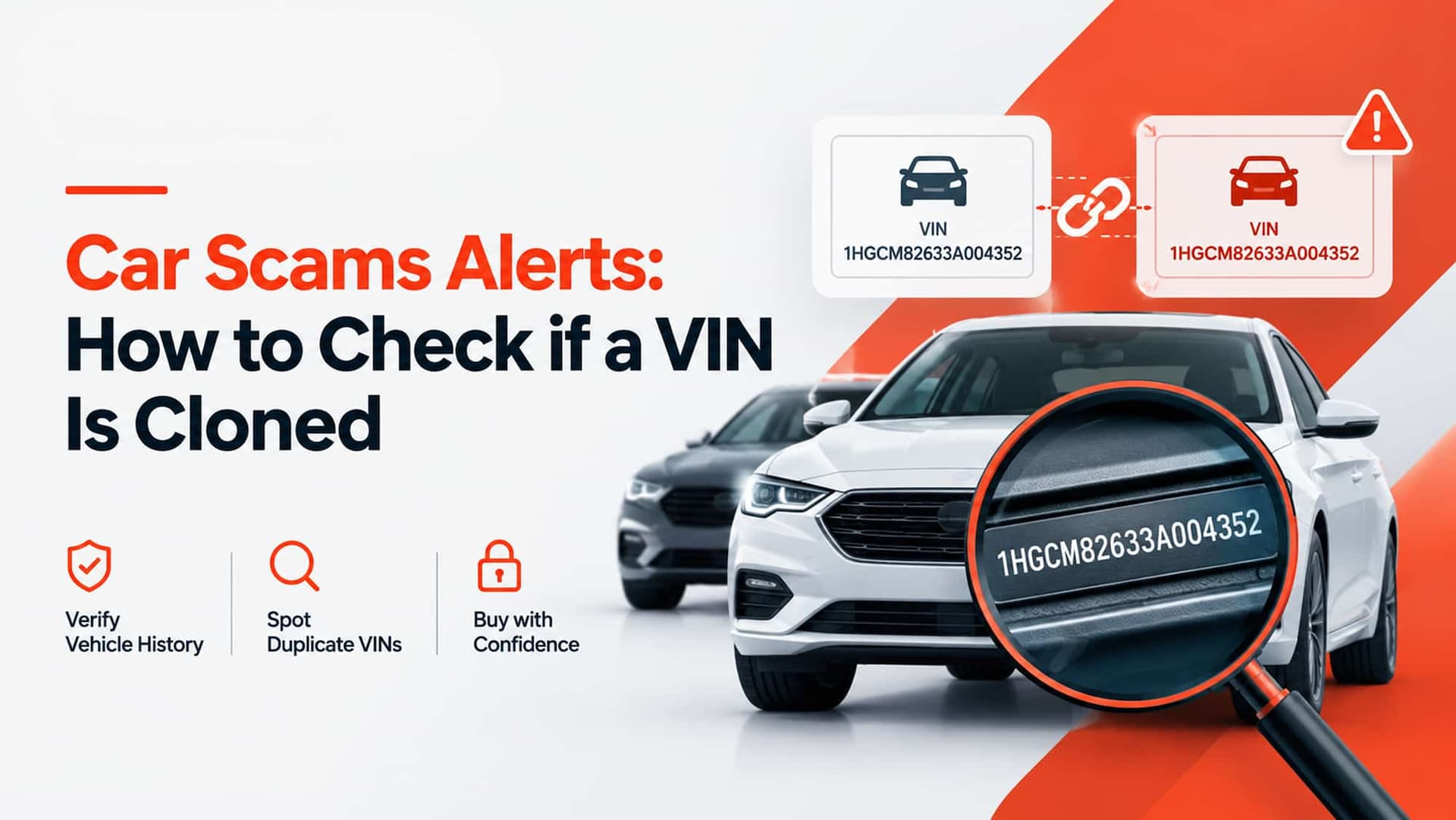
VIN cloning is a form of vehicle identity fraud in which a legitimate Vehicle Identification Number (VIN) is used to identify another vehicle. VIN cloning can make a stolen or otherwise problematic vehicle appear connected to a legitimate vehicle's records.
Understanding how VIN cloning works can help you recognize warning signs before completing a purchase. A VIN search, vehicle history review, document comparison, and physical inspection can all play a role in verifying that the vehicle in front of you matches the identity represented by its records.
This guide explains what VIN cloning is, how it differs from VIN swapping, what signs to look for, and how to check a used vehicle before you buy it.
Key Takeaways
- VIN cloning is a form of vehicle identity fraud where a legitimate VIN is copied and used on another vehicle.
- Compare the VIN across the vehicle and its documents to identify potential inconsistencies.
- A VIN check is one part of the verification process, not a guarantee against every type of fraud.
What Is VIN Cloning?
VIN cloning is a type of vehicle identity fraud in which a legitimate VIN is copied and used to identify a different vehicle. The copied VIN may belong to a real vehicle with legitimate records, while the vehicle carrying that identity is not the same.
Every vehicle has a unique Vehicle Identification Number. The VIN is used across documents, registration records, vehicle-history databases, and other systems to identify a particular vehicle. When someone uses another vehicle's VIN, they are attempting to make a different vehicle appear to have that identity.
This creates a serious problem: the records may look reasonable while the physical vehicle does not actually belong to those records. That is why VIN verification should involve more than entering a number into a database. The VIN, vehicle specifications, documentation, history, and physical vehicle should make sense together.
How to Check if a VIN Is Cloned
Checking for VIN cloning requires more than confirming that a VIN is valid. The goal is to determine whether the identity represented by the VIN matches the physical vehicle you are considering.
1. Get the VIN Directly From the Vehicle
Start with the vehicle itself rather than relying only on a VIN provided by the seller.
Record the VIN and compare it with the VIN shown on the vehicle's available documents.
2. Run a VIN Check
Use the VIN to review available vehicle information and history. A VIN check can help you establish the vehicle's recorded specifications and identify information that may require further investigation.
3. Compare the VIN With the Documents
Check whether the VIN shown on the vehicle corresponds with the available registration, title, or other ownership documentation. An unexplained discrepancy should be investigated before the purchase.
4. Compare the Vehicle's Details
Review the specifications associated with the VIN and compare them with the vehicle in front of you. Depending on the available data, this can include:
- model year
- make
- model
- trim
- body type
- engine
- drivetrain
- other identifying specifications
5. Compare the Timeline
Ask whether the vehicle's history makes sense. For example, if the seller's description, odometer reading, location, and ownership story conflict with the available records, investigate the discrepancy rather than assuming that one source must be correct. Look at available records for information such as:
- accident history
- title information
- odometer readings
- ownership information
- auction records
- reported damage
- registration or location history
The exact records available will depend on the vehicle and the data sources used.
6. Inspect the Physical Vehicle
A VIN check should complement a physical inspection. Look at the vehicle's VIN identifiers and compare them with the documentation. If something appears damaged, altered, inconsistent, or otherwise unusual, consider having the vehicle examined by a qualified professional.
8. Stop When Important Details Do Not Match
You do not need to prove VIN cloning yourself before deciding not to proceed with a purchase. If the VIN, documents, specifications, history, and physical vehicle do not align, pause the transaction and investigate the discrepancy.
The objective is not simply to find a VIN that returns records. It is to establish that those records belong to the vehicle you are buying.
How Does VIN Cloning Work?
VIN cloning involves transferring the identity of one legitimate vehicle to another vehicle. The exact methods used can vary, but the underlying concept is relatively simple: a legitimate VIN is used to make another vehicle appear to be the vehicle associated with that VIN.
A typical VIN-cloning scheme can involve several stages:
1. A legitimate vehicle identity is obtained
A criminal identifies a legitimate vehicle and obtains its VIN. The VIN may belong to a vehicle with a normal ownership and registration history.
2. The VIN is copied
The legitimate VIN becomes the identity that the criminal wants to use for another vehicle.
3. Another vehicle is given that identity
The copied identity is associated with a different vehicle. That vehicle may be stolen, damaged, or otherwise difficult to sell under its true identity.
4. Records and documents may be presented as supporting evidence
Fraudulent or misleading documentation can make the vehicle appear more consistent with the copied identity. This can make the problem harder for an inexperienced buyer to recognize.
5. The vehicle is offered for sale
The buyer sees a vehicle carrying a legitimate-looking identity and may search the VIN. If the VIN belongs to a legitimate vehicle, the resulting information can appear reassuring. This is what makes VIN cloning particularly difficult to identify.
The problem is not necessarily that the VIN has no history. The problem is that the history may belong to a different vehicle. For that reason, a buyer should compare the VIN's recorded information with the physical vehicle, its documents, and the seller's description before buying.
Why Is VIN Cloning Dangerous for Used-Car Buyers?
VIN cloning can create problems that go well beyond paying too much for a used car. If the vehicle's identity has been misrepresented, the buyer may discover ownership, registration, insurance, or resale problems after the transaction.
A buyer could potentially purchase a vehicle that is:
- reported stolen
- associated with an incorrect identity
- difficult to register
- difficult to insure
- connected to records that belong to another vehicle
- subject to investigation or recovery
The financial consequences can also be significant. A buyer who believes they have purchased a legitimate vehicle may have limited options if the vehicle is later identified as stolen or fraudulently represented.
Another important risk is that a cloned vehicle may not look obviously suspicious.
The vehicle can have a normal appearance, a seller can provide documents, and a VIN search can return real records. None of those factors should automatically be treated as proof that the physical vehicle and its recorded identity are the same.
The safest approach is to look for consistency across multiple sources. The VIN should correspond with the vehicle's documents, specifications, history, and physical identifiers. When those pieces do not agree, the discrepancy deserves attention before money changes hands.
What Should You Do If You Suspect VIN Cloning?
If you notice a possible VIN discrepancy, do not ignore it simply because the vehicle looks good or the seller seems credible.
If You Have Not Bought the Vehicle
Pause the transaction and investigate the discrepancy. Compare the VIN, documents, vehicle specifications, history, and physical vehicle. If necessary, have the vehicle inspected by an appropriate professional or contact the relevant authority.
You do not need to prove fraud before deciding not to proceed with a purchase.
If You Already Bought the Vehicle
Keep all relevant records, including:
- purchase documents
- advertisements
- messages with the seller
- VIN information
- vehicle history reports
- registration documents
- photographs of the vehicle
Contact the appropriate authorities, insurer, registration authority, or legal professional depending on the circumstances. Do not attempt to resolve suspected vehicle fraud by altering or replacing vehicle identification information yourself.
The earlier a potential identity problem is documented and reported, the easier it may be to establish what happened and determine the appropriate next step.
Signs a Buyer May Be Trying to Scam You
If you’re a seller, you should be cautious when a buyer's behavior feels unusual, or they insist that you use a specific website before they will continue with the sale. Watch for signs such as:
- The buyer insists that you purchase a vehicle history report from a specific, unfamiliar website.
- The website looks suspicious or asks for unnecessary personal or payment information.
- The buyer sends you a random report link instead of using a trusted VIN check service.
- The buyer disappears after asking you to pay for a report.
- The VIN shown in the buyer's message does not match your vehicle.
- The buyer pressures you to act quickly or says they will only proceed if you use their preferred website.
These situations don't automatically mean the buyer is a scammer, but they are good reasons to slow down and verify the request before sharing information or making a payment.
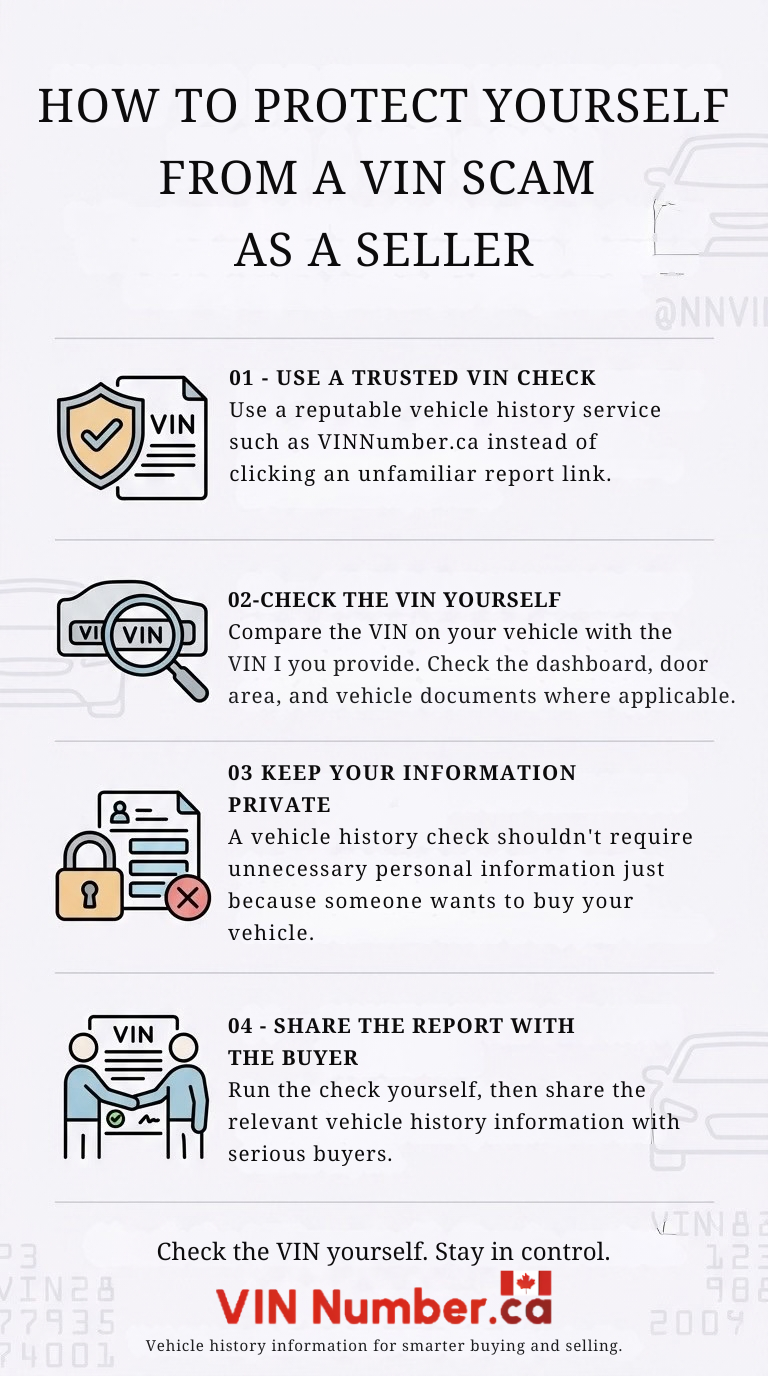
A buyer asking for a vehicle history report isn't necessarily a red flag. The safer approach is to run the VIN yourself through a source you trust instead of paying for a report from an unfamiliar website. Use a trustworthy website to get a trusted vehicle history report before sharing your vehicle history with a buyer.
If something about a buyer, seller, payment request, or VIN report link feels suspicious, stop the transaction before sharing more information or sending money. Acting early can help limit your risk.
Stop the Transaction
Don't make any additional payments or purchases if you suspect the request is part of a scam. If someone is pressuring you to use an unfamiliar VIN report website, don't follow their link just to complete the sale.
Verify the VIN Yourself
If the situation involves a vehicle history report, get the VIN directly from the vehicle and run the check yourself through a source you trust, such as VINNumber.ca. This helps you avoid relying on information or links provided by a potentially suspicious person.
Protect Your Personal Information
If you've already shared information such as your name, phone number, address, payment details, or account information, be cautious about further contact. Secure affected accounts and contact your financial institution if you shared payment or banking information.
Keep the Evidence
Save messages, emails, payment records, advertisements, VIN information, screenshots, and suspicious website details. These records can be useful when reporting the incident or explaining what happened.
Report the Scam
If you believe you've been targeted by fraud, consider reporting it to the appropriate platform, financial institution, or local authorities. Reporting suspicious activity can also help prevent others from encountering the same scheme.
If a vehicle transaction starts feeling suspicious, don't let pressure push you into completing it. Stop, verify the VIN yourself, protect your information, and investigate the request before continuing.
For vehicle history checks, use a source you choose yourself rather than relying on an unfamiliar link sent by someone you don't know. Check the VIN yourself before moving forward with the transaction.
Frequently Asked Questions About VIN Cloning
What is VIN cloning?
VIN cloning is a form of vehicle identity fraud in which a legitimate VIN is used to identify another vehicle. The VIN may belong to a real vehicle with legitimate records, while the vehicle carrying that identity is different.
How do I know if my VIN is cloned?
To know if your VIN is cloned, look for inconsistencies between the VIN, vehicle documents, physical vehicle, specifications, odometer reading, and available history. A single discrepancy does not necessarily prove cloning, but multiple unexplained inconsistencies should be investigated.
Can a VIN check detect VIN cloning?
A VIN check can show information and inconsistencies that may help identify a problem, but it cannot guarantee that a vehicle is not cloned. A legitimate VIN can be copied from another vehicle, so the report should be compared with the physical vehicle and its documents.
What are the signs of a cloned VIN?
Potential warning signs include VIN mismatches, vehicle specifications that do not correspond with the VIN, unexplained odometer reading or location inconsistencies, unusual VIN identifiers, suspicious documentation, and a vehicle history that does not fit the seller's description.
Is VIN cloning illegal?
Using a vehicle's identity fraudulently can involve serious criminal and legal consequences. The specific laws and penalties depend on the jurisdiction and circumstances.
Is VIN cloning common in Canada?
VIN-related vehicle fraud is a recognized concern for Canadian vehicle buyers. The risk can vary by vehicle, transaction, jurisdiction, and circumstances, so buyers should focus on verification rather than assuming that a particular vehicle is safe or unsafe based only on general statistics.
What is the difference between VIN cloning and VIN swapping?
VIN cloning generally refers to using a legitimate VIN identity on another vehicle. VIN swapping is a broader term for replacing one vehicle identity with another. The terminology can overlap depending on the circumstances.
Can I buy a car with a cloned VIN?
Buying a vehicle with a cloned VIN can create serious ownership, registration, insurance, and financial problems. If you identify a possible VIN discrepancy before buying, investigate it before completing the transaction.
What should I do if I suspect a vehicle has a cloned VIN?
Stop and document the discrepancy. Compare the vehicle, VIN, documents, and available history, and seek assistance from the appropriate professional or authority. If you have already purchased the vehicle, preserve your transaction records and report the suspected fraud through the appropriate channels.
Does a clean VIN report guarantee that a vehicle is not cloned?
No. A cloned VIN may belong to a legitimate vehicle, meaning the VIN can have genuine records. A report should therefore be combined with physical inspection and document verification.