Buying a used car in Ontario? Selling one? Registering an out-of-province vehicle? In many of these situations, you'll need an Ontario vehicle safety inspection. This guide walks you through everything you need to know, including what gets checked, how to prepare, and one important step that most people overlook before even booking an appointment.
What Is an Ontario Vehicle Safety Inspection?
An Ontario car safety inspection confirms that a vehicle meets the province's minimum safety standards. It is not the same as an emissions test. It is a mechanical and visual check performed by a licensed inspection station.
You typically need this inspection when you:
- Sell a used vehicle privately in Ontario
- Register a vehicle that was previously registered outside Ontario
- Change ownership of a vehicle that has not been inspected recently
- Reinstate a vehicle from salvage or rebuilt status
The inspection results in a Safety Standards Certificate. This certificate is valid for 36 days from the inspection date, so timing matters.
Why You Need an Ontario Vehicle Inspection Checklist?
Going in prepared saves you time and money. A failed inspection often means a second appointment. It can also mean unexpected repair bills.
Using an Ontario vehicle inspection checklist before your appointment helps you:
- Catch small issues before a mechanic does
- Avoid paying twice for a re-inspection
- Understand roughly what repairs might be needed
- Negotiate a fair price if you are buying or selling
Before You Book: Check Your Vehicle's History First
Here is a step most buyers and sellers overlook. Before you spend money on a safety inspection, check the vehicle's history. A safety inspection only tells you about the current mechanical condition. It will not tell you if the car was in a major accident, has a branded title, or was reported stolen.
This is where a VIN check becomes useful.
Run a VIN check at vinnumber.ca before you book your inspection. This single step can save you from wasting money on a car that has hidden problems.
Why Check Vehicle History Before Paying for Inspection?
Think of it as a filter. You want to make sure the vehicle's history is clean before you invest time and money into a mechanical inspection.
Here is the simple logic:
- You find a used car listing.
- You run the VIN through vinnumber.ca first.
- If the history is clean, you move forward and book the safety inspection.
- If the report shows red flags, you walk away before spending a dollar.
This order protects your wallet. It also protects you from buying a vehicle with problems that are not visible on the surface.
What a Vehicle History Report Includes?
A typical report from vinnumber.ca includes:
Accident History
Previous collisions, damage records, and reported repair history.
Title Status
Confirms whether the vehicle has a clean, salvage, rebuilt, or flood-damaged title.
Odometer Records
Odometer reading history that may help identify odometer rollback or discrepancies.
Theft Check
Verifies whether the vehicle has been reported stolen.
Lien Information
Shows any outstanding loans or financial claims against the vehicle.
Registration History
Tracks past registrations, including province and dates of registration.
Benefits of Checking Before the Safety Inspection
Before scheduling a safety inspection, it's worth checking the vehicle's history report first. Doing so can help you avoid costly surprises and make a more informed buying decision.
Save Money
Avoid paying for a safety inspection on a vehicle you may decide not to buy.
Save Time
Skip inspections and appointments for vehicles with serious warning signs.
Strengthen Your Negotiating Position
A clean history report or minor issues can give you more confidence when negotiating the price.
Reduce Risk
Lower the chances of buying a vehicle with hidden damage, title issues, or a troubled past.
Get a Vehicle History Report Now
Once your report comes back clean, you are ready to move on to the physical checklist below.
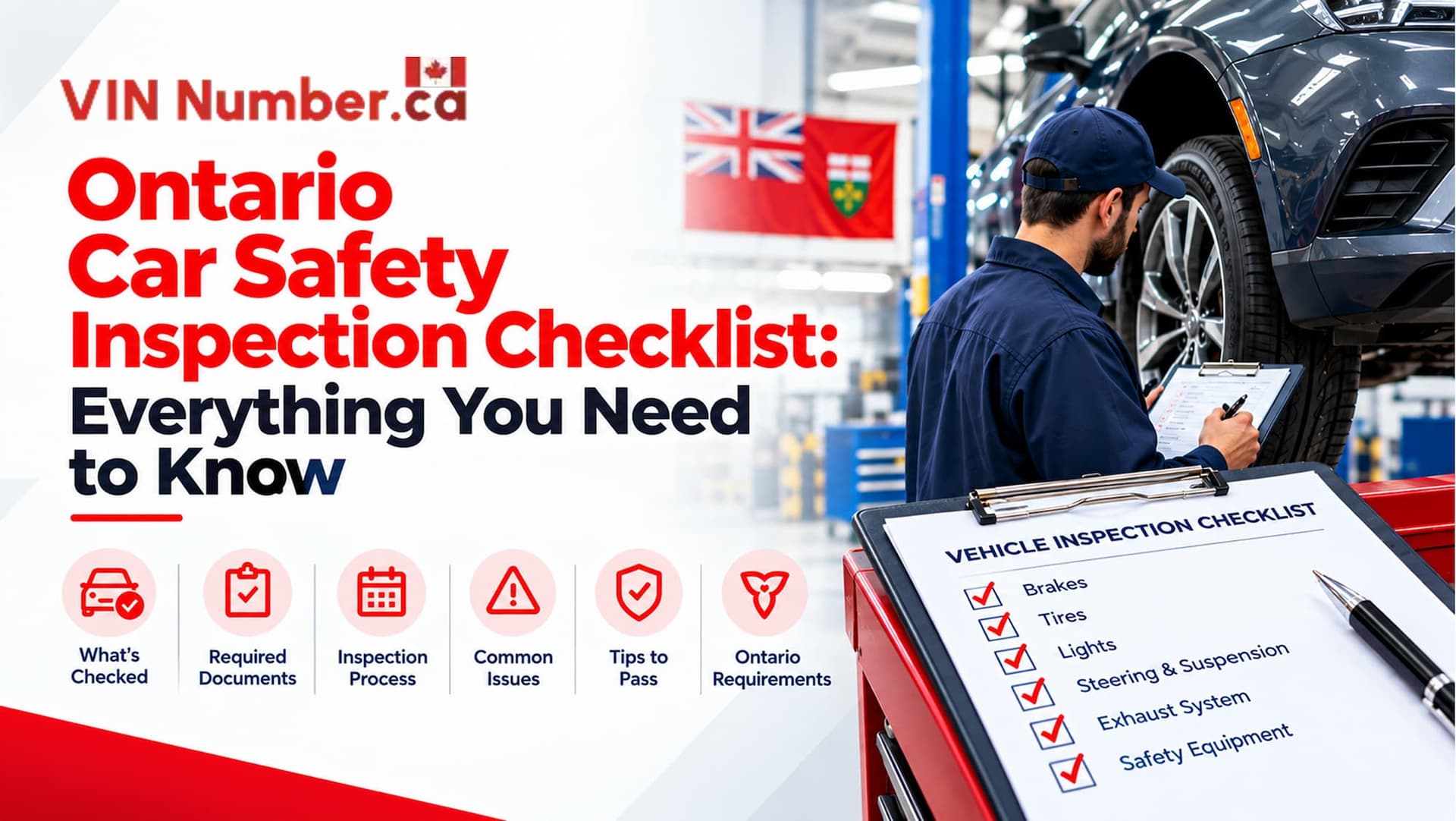
The Complete Ontario Vehicle Safety Inspection Checklist
This section breaks the inspection down by area. Go through each one before your appointment.
Exterior Checks
- Check all body panels for rust, especially near wheel wells and the frame.
- Look for cracks or chips in the windshield.
- Confirm both windshield wipers work and are not worn out.
- Check mirrors for cracks or looseness.
- Inspect the fuel tank and fuel cap for leaks or damage.
Interior Checks
- Test the horn.
- Check that all seatbelts latch properly and are not frayed.
- Confirm the speedometer and odometer are working.
- Test the parking brake.
- Check that door latches close securely.
Under the Hood
- Inspect the battery for corrosion or leaks.
- Check for fluid leaks under the engine.
- Confirm the steering system has no excessive play.
- Inspect belts and hoses for cracking.
- Check the exhaust system for leaks or loose parts.
Brakes and Tires
Brakes and tires are two of the most common reasons vehicles fail inspection.
- Measure tire tread depth. Ontario requires a minimum tread depth to pass.
- Check for uneven tire wear, which can point to alignment issues.
- Inspect brake pads and rotors for wear.
- Test brake pedal response for sponginess or excessive travel.
- Confirm the parking brake holds the vehicle on an incline.
Lights and Electrical
- Test headlights on both low and high beam.
- Check turn signals, front and rear.
- Confirm brake lights work when the pedal is pressed.
- Test reverse lights.
- Check license plate lights.
Step-by-Step Guide to Passing Your Ontario Car Safety Inspection
Follow these steps for the best chance of passing on your first try.
Step 1: Run a VIN Check
Start with a VIN check. Confirm that the vehicle's history is clean before spending any time or money on the next steps.
Step 2: Go Through the Checklist Above
Work through the exterior, interior, under the hood, brakes and tires, and lights sections. Use a flashlight and check during daylight if possible.
Step 3: Address Obvious Issues
Fix anything simple yourself. This includes burnt-out bulbs, low tire pressure, or a loose mirror.
Step 4: Book With a Licensed Inspection Station
Only licensed Motor Vehicle Inspection Stations can issue a Safety Standards Certificate in Ontario. Confirm the station is licensed before booking.
Step 5: Bring the Right Documents
Bring your vehicle registration or ownership documents. Some stations also ask for identification.
Step 6: Review the Inspection Report
If your vehicle fails, ask for a detailed breakdown of what needs repair. This helps you get accurate repair quotes.
Step 7: Complete Repairs and Re-Inspect if Needed
If repairs are required, complete them and return for a re-inspection within the required timeframe.
Where to Get an Ontario Vehicle Safety Inspection Checklist PDF?
Many licensed inspection stations and the Ontario government provide a printable Ontario vehicle safety inspection checklist PDF. Keeping a printed copy on hand is useful. You can check items off as you go through your vehicle before the appointment.
What Happens If Your Vehicle Fails
A failed inspection is not the end of the road. The inspector will give you a list of items that need repair. Once those repairs are complete, you can return for a re-inspection. Many stations offer a reduced fee for re-inspection within a set number of days, so ask about this when you book.
Final Thoughts
A smooth Ontario vehicle safety inspection starts before you even book an appointment. Check the vehicle's history first with a tool like vinnumber.ca, then work through the checklist to catch issues early. This simple order saves you time, money, and unnecessary stress.
Frequently Asked Questions
Does My Car Need a Safety Inspection in Ontario
Yes, in specific situations. You need a safety inspection when you sell a used vehicle privately, when you register a vehicle that was previously registered outside Ontario, or when you reinstate a vehicle from salvage status. Regular annual inspections are not required for most personal vehicles in Ontario. The requirement mainly applies during a change of ownership or registration.
How Long Is a Safety Standards Certificate Valid?
A Safety Standards Certificate is valid for 36 days from the date of inspection.
How Much Does an Ontario Vehicle Safety Inspection Cost?
Cost varies by station, since pricing is not fixed by the province. It is a good idea to call a few licensed stations and compare prices before booking.
Should I Check Vehicle History Before or After the Safety Inspection
You should obtain a vehicle history report before scheduling a safety inspection. Checking a vehicle's history with a trusted service like vinnumber.ca can help you avoid spending money on an inspection for a vehicle with a branded title, major accident history, or other potential red flags. Reviewing the vehicle's history beforehand allows you to make a more informed decision and identify costly issues before moving forward with the inspection process.