
Best Classic VIN Decoder in Canada
In the market to purchase a classic car? Use VINNumber.ca ’s classic VIN decoder tool to check vehicle specifications like engine and body type information, and market value. Click on the form below to start decoding any classic VIN.
Understanding Classic and Modern VINs
Vehicle Identification Numbers have not always followed the same format. Today, every vehicle uses a standardized 17-character VIN, but older vehicles often used shorter serial or chassis numbers that varied by manufacturer.
Classic VINs (Pre-1981)
Before 1981, there was no universal VIN standard in most markets. Manufacturers developed their own identification systems; hence, every vehicle has a different VIN because there was no standardization.
No Standardized Format
A vehicle's identification number contains only a few characters or more than a dozen, depending on the manufacturer and model year. Even vehicles from the same brand could use different VIN formats across production years.
Manufacturer-Specific Decoding
Because there was no industry-wide standard, decoding a classic VIN often requires access to manufacturer records, historical databases, build sheets, or factory documentation.
Modern VINs (1981 to Present)
Since 1981, vehicles sold in Canada have followed a standardized 17-character VIN format. This system helps manufacturers, buyers, insurers, and government agencies identify vehicles consistently.
Standard 17-Character Structure
Modern VINs have 17 characters and use numbers and capital letters, excluding I, O, and Q to prevent confusion with similar-looking characters. This standardized format is used by vehicle manufacturers all over the globe.
What the VIN Shows
Each section of a modern VIN shows specific information about the vehicle. The first characters identify the manufacturer and country of origin, the middle section describes key specifications such as body style and engine type, while the last seven characters show the vehicle assembly plant and the serial number.
Where to Find the VIN on a Classic Car?
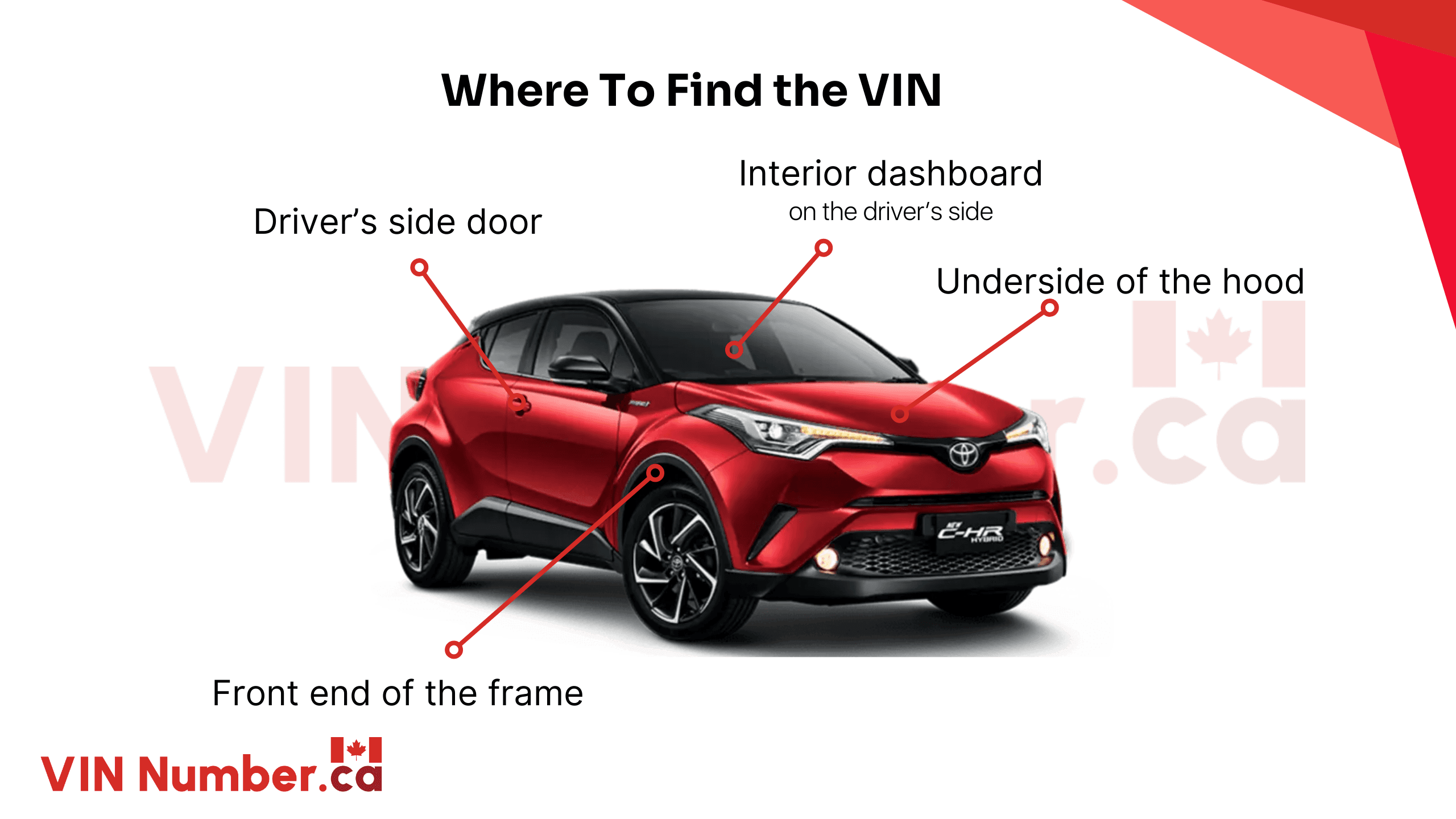
Finding the VIN on a classic vehicle is almost the same as finding the VIN on a modern vehicle. Take a look at these locations to get the VIN.
On the Vehicle’s Body
Check these areas carefully to find the VIN.
- Dashboard on the driver’s side
- Driver’s door area
- Engine compartment
- Trunk
On Vehicle’s Documentation
Aside from the vehicle’s body, you can find the VIN on the paperwork as well.
- Title paper
- Registration paper
How to Decode a Classic Car VIN
To decode a classic car VIN number, you can use VINNumber.ca’s service by following these simple steps, and get the result in less than a minute.
Step 1: Enter the VIN
Once you have the VIN of any classic car you want to decode, click the form above and write it down.
Step 2: Submit the Form
Next, click the button and submit the form. Then, wait for a few seconds to get the information.
Step 3: Check the Detailed Vehicle Information
Check the detailed vehicle information such as engine type, body type, drive type, and market value.
What Information Can You Get From a Free Classic VIN Decoder?
A free classic VIN decoder helps check details about a vintage vehicle's original factory configuration. While it does not provide ownership records or a complete vehicle history, our classic VIN decoder helps you to check the detailed vehicle information and market value.
Vehicle Identification Details
The decoder can help confirm the vehicle's make, model, model year, and country of origin based on the attached VIN information.
Original Body and Trim Configuration
Check the detailed vehicle information on its original body style, trim level, and production series. These details can help determine whether the vehicle still matches its factory specifications or has undergone significant modifications over the years.
Engine Information
Depending on the manufacturer and model year, the decoder may reveal engine-related details such as engine family, displacement, cylinder configuration, or factory-installed engine options. This information is often used to verify whether a vehicle retains its original powertrain.
Transmission and Drivetrain Data
Some classic VIN records also include transmission and drivetrain identifiers. These codes can provide insight into how the vehicle was originally equipped, whether it left the factory with a manual or automatic transmission, and in some cases, the type of rear axle or drivetrain setup.
Factory Specifications
A classic VIN lookup may provide original specifications such as wheelbase, vehicle dimensions, weight ratings, and other chassis-related information. These details are especially helpful during restoration work, parts sourcing, and authenticity verification.
Production and Manufacturing Records
Check the assembly plant information, production sequence numbers, or special factory codes by decoding the VIN. These records can help place the vehicle within its production run and provide additional historical context.
Original MSRP and Factory Equipment
When available, the decoder may display the vehicle's original retail price and selected factory-installed equipment. This information offers a better understanding of how the vehicle was configured when new and can help assess its historical significance and collectability.
Auction and Listing Activity
The free VIN decoder helps to indicate whether the vehicle has ever appeared at an auction, be it offline or online. The VINNumber.ca’s classic VIN decoder also shows a photo snapshot and sales note of the vehicle when it was auctioned.
Why is Decoding a Classic Car VIN Number Important?
Buyers
Purchasing a classic vehicle involves more than checking its condition and appearance. VIN decoding helps buyers understand the vehicle's original identity and evaluate whether it matches the seller's claims.
Verify What You're Actually Buying
A classic car's appearance can be deceiving. VIN decoding helps confirm key details such as the original model, body style, and factory engine, making it easier to determine whether the vehicle matches its advertised description.
Evaluate Authenticity Before Negotiating
Originality plays a major role in the classic car market. Understanding the vehicle's factory configuration can help buyers distinguish between genuine examples and vehicles that have been altered, upgraded, or recreated over time.
Make More Informed Purchase Decisions
Decoding the VIN before viewing a vehicle provides valuable background information that can help during negotiations.
Inside a Classic VIN: What the Numbers Mean
Classic VINs are different from modern VINs. Before 1981, there was no standard format, so each manufacturer used its own numbering system. Because of this, the length and meaning of a VIN could vary from one brand to another. Take a look at this example to see how a classic VIN is broken down.
Sample: 252677X172255
Position(s) | Code | Meaning |
|---|---|---|
1 | 2 | Pontiac Division |
2-3 | 52 | Catalina Series |
4-5 | 67 | Convertible Body Style |
6 | 7 | 1967 Model Year |
7 | X | Kansas City Assembly Plant |
8-13 | 172255 | Sequential Production Number |
Need to Get More Vehicle Information? Get the Classic History Report
When purchasing a used classic car, knowing the car’s records is non-negotiable. You can use the classic VIN check and get the vehicle history report that shows records, like accident, odometer reading, title, ownership history, and more.
Ownership History
Check the detailed information on the vehicle’s ownership history, like the year of purchase, location, and duration of ownership. Please note that private information of previous owners, like names and addresses are not shown.
Title Brand Check
Confirm if the vehicle was ever flagged as salvage, rebuilt, or lemon. Checking the car’s title helps you determine its roadworthiness, value, and insurance fee.
Accident History
Sometimes an accident history is not visible unless it has severe damage. See the detailed accident history of the car, including the location and the date when it happened, on the vehicle report.
Odometer Reading
Odometer rollback is a common crime in the used car market; both classic and modern cars are affected. With our report, you can check detailed odometer records along with the date and the last recorded odometer reading.
Theft Records
Accidentally purchasing a stolen vehicle can lead to legal consequences. The VINNumber.ca classic report helps to check the location and date when the vehicle was stolen. Make sure this record is clean before buying.
Damage History
A classic vehicle that has damage, whether it's minor or major, can be dangerous. Examine if the vehicle carries damage such as non-title fire damage, dents and scratches, recycling, or auction junk.
Auction Records
Check if the car was sold at an auction before you purchased it. In the report, you’ll see auction history records such as auction location, auction date, final price, and status. In addition, you’ll also get up to ten pictures of the car when it was auctioned.
Vehicle Usage
Different usage has different wear and tear. On the report, you can examine if the car was previously used as a personal vehicle, leased, rented, a taxi, a government vehicle, or even used as a police car.
Why Do You Need to Use Our VINNumber.ca Classic VIN Decoder
Whether you're researching a vintage vehicle, verifying a potential purchase, or documenting a restoration project, decoding a classic VIN can help to show the details of:
Identify the Vehicle's Original Specifications
Get the actual information, such as the make, model, model year, body style, assembly plant, and other manufacturer-specific details. This helps confirm that the vehicle matches its original factory records.
Support Authenticity Verification
Classic vehicles often change hands multiple times and may undergo modifications or restorations. VIN decoding provides a useful reference point for verifying a vehicle's identity and comparing it against its current condition.
Quick and Easy Vehicle Research
Access VIN-based information in seconds to support buying decisions, restoration planning, insurance documentation, and historical vehicle research. Our decoder helps simplify the process of getting a vehicle history report.
What They Say About Our Service
Chance Snyder
Date of experience: July 30, 2023
This website was recommended by several different articles, so I gave it a try while my wife and I searched for a used car. The reports are less expensive than Carfax, but far superior to other options I have tried.
Keith Williams
Date of experience: August 08, 2023
There is little to no information out there on the original equipment that comes on a used vehicle you are trying to buy. To finally find a website was amazing.
Mike Ericson
Date of experience: July 24, 2023
This vehicle history report has everything I needed to entice a buyer. It's a great alternative to a Carfax at a much better price!!
Explore More Vehicle Lookup Tool
Need to check any other vehicle information? Use our VIN check tools to obtain the actual and complete information.
Decode Your Classic VIN Before You Buy, Sell, or Restore
A classic VIN can provide valuable details about a vehicle's original identity, including its make, model, body style, model year, and production information. Use the VINNumber.ca Classic VIN Decoder to uncover key vehicle details in seconds and make more informed decisions.
FAQs on Classic VIN Decoder
How to decode a classic car VIN in Canada?
To decode a classic car VIN in Canada depends heavily on the vehicle’s model year. Unlike modern vehicles, classic cars built before 1981 do not follow a universal VIN standard. Each manufacturer used its own numbering system, which means the VIN format can vary significantly. To decode a classic VIN, you can use VINNumber.ca’s classic VIN decoder service.
Is there a free classic VIN decoder?
Yes. Many classic VINs can be decoded at no cost, although the amount of information available will vary depending on the vehicle and manufacturer. You can use the VINNumber.ca Classic VIN Decoder to look up basic vehicle details and learn more about the vehicle's original specifications.
Can you decode a classic BMW VIN?
Yes. However, the decoding method depends on the age of the BMW. Vehicles with a standard 17-digit VIN can usually be decoded using VINNumber.ca. Older BMW models may use shorter chassis numbers instead of modern VINs, which often require manufacturer records or classic BMW databases for additional information.
How to decode a classic Ford VIN?
Classic Ford VINs are different from modern Ford VINs because they were produced before VIN standardization. Depending on the model year, the VIN may contain information about the vehicle's year, assembly plant, body style, engine, and production sequence. The exact format varies by era, so decoding requires information specific to that vehicle's production year.
What is the best VIN checker for old cars?
The best VIN checkers for pre-1981 classic cars vary depending on the goal, whether it is tracing historical details or decoding original factory specifications, since most modern tools are designed only for 17-digit VINs.The VINNumber.ca classic VIN decoder helps you to decode any classic car VIN and get the result in under a minute!
Is there a way to decode a classic Chevrolet VIN?
Yes, decoding a classic Chevrolet VIN is very possible. Most classic Chevrolet VINs can be decoded to reveal basic information about the vehicle. However, Chevrolet used different VIN formats across various years and models; the information available will depend on the specific vehicle being decoded. Knowing the model year can help improve decoding accuracy and provide more detailed results.