
Free EV VIN Decoder – Check Electric Vehicle Specs
Enter a 17-character VIN to decode an electric vehicle's basic specifications, including its year, make, model, trim, drivetrain, and available battery information, all at no cost!
What Is an EV VIN Decoder?
An EV VIN decoder is an online tool that interprets a Vehicle Identification Number (VIN) to identify an electric vehicle and retrieve available factory information, so you don’t have to interpret each number manually.
Depending on the vehicle and available manufacturer data, decoding can reveal information such as the model year, manufacturer, model, trim, drivetrain, production information, and other specifications.
What You’ll Get on Free EV VIN Lookup?
You can check your EV with our free EV VIN decoder. These tools provide basic information, while paid reports offer detailed insights. Here’s a comparison:
| Feature | Free EV VIN Decoder | Full VIN Check |
|---|---|---|
| Free VIN decoding for all vehicle types | ✓ | ✓ |
| Year, make, model, trim | ✓ | ✓ |
| Full vehicle specifications | ✓ | ✓ |
| Sales listings | ✓ | ✓ |
| Auction records | ✓ | ✓ |
| Odometer reading during auction/sales | ✓ | ✓ |
| History Records | ✘ | ✓ |
| Theft records | ✘ | ✓ |
| Owner records | ✘ | ✓ |
| Salvage records | ✘ | ✓ |
| Title brand records | ✘ | ✓ |
| Odometer rollback | ✘ | ✓ |
| Lien and loan records | ✘ | ✓ |
| Vehicle usage | ✘ | ✓ |
| Service history | ✘ | ✓ |
| Open recalls | ✘ | ✓ |
How to Look Up an EV VIN?
To run an EV lookup by VIN, follow these steps:
Find the VIN on Your EV
Locate the EV’s VIN. Check the vehicle areas and documents mentioned above. Can’t find it? Ask the seller directly.
Enter the VIN
Type or copy the VIN on the form above. Click the “Search VIN’ button to decode your EV VIN. In seconds, our tools will give you all the basic information about your EV tied to the VIN.
Get your report
Upgrade to a comprehensive report that includes the EV battery, market value, history, ownership, and condition.
Why EV History Matters More Than Just Specifications?
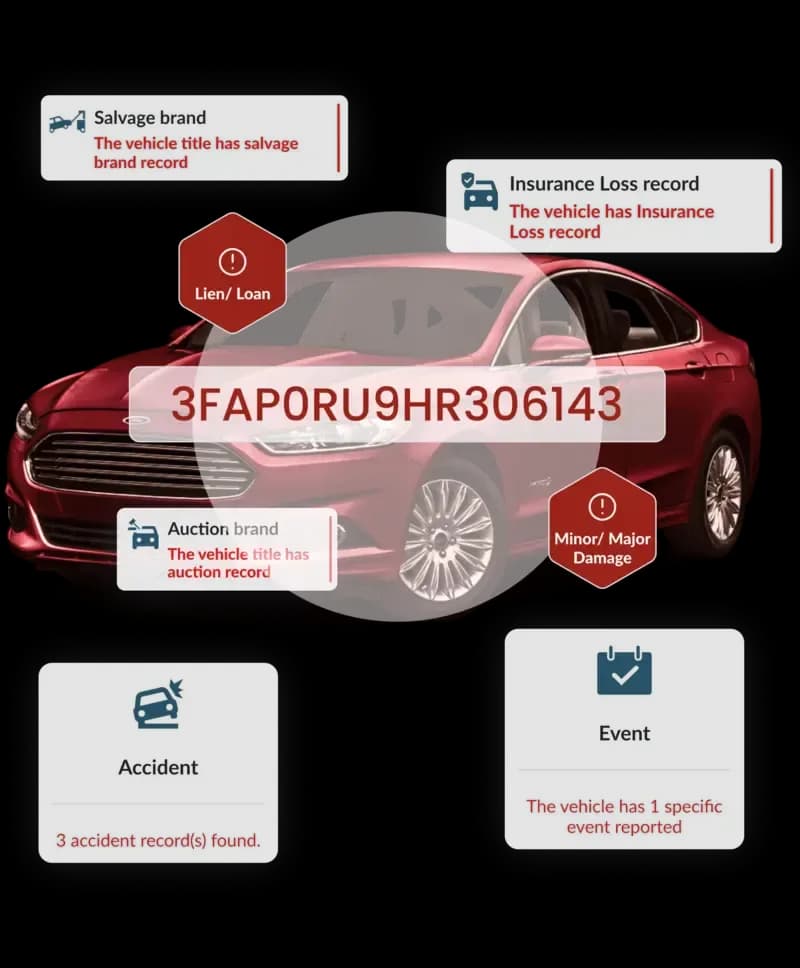
An EV can look excellent in a listing while still having a history worth investigating. A VIN decoder can tell you the vehicle's factory configuration, but they do not explain previous accidents, auction sales, title branding, ownership events, or other reported history.
Battery and Powertrain Records
Look for available records related to damage, repairs, or service involving the battery and electric powertrain.
Accident and Damage History
Previous collision or damage records can help you identify events that could have affected the vehicle's structure or EV components.
Odometer Reading Records
Past odometer readings can help you compare the vehicle's reported odometer reading with previously recorded readings and identify potential gaps or inconsistencies.
Title and Registration Challenges
Review available title and registration records, including salvage, rebuilt, or branded status, especially for EVs imported into Canada.
EV Recall Records
Check available recall records to identify reported safety issues and determine whether applicable recall work was completed or remains outstanding.
Stolen Vehicle Records
Check available theft records to help determine whether the EV has been reported stolen or involved in a theft-related event.
Auction and Sales Records
Review available auction and online listing sales records, including reported damage, vehicle condition, and sale information, to have better understand the EV's reported market history.
Service & Repair History
Review available service and repair records to understand the EV's maintenance and repair history.
Warranty Records
Check available warranty records for coverage information and reported warranty events associated with the EV.
Inspection Records
Review available inspection records and reported results to see whether the EV has undergone documented inspections.
How to Manually Read an EV VIN?
The VIN consists of 17 characters and is divided into three main sections: WMI, VDS, and VIS. The example below shows how a 2025 Dodge Charger VIN is structured.
World Manufacturer Identifier (WMI )
Positions 1–3: 2C3
- 2 = Canada
- C3 = Manufacturer identifier associated with FCA/Stellantis passenger vehicles
- This VIN is associated with FCA Canada Inc.
The WMI generally identifies the manufacturer and country or region associated with the vehicle.
Vehicle Descriptor Section (VDS)
Positions 4–8: CDBCK
For this Dodge Charger VIN, these characters encode vehicle characteristics such as:
- C = Charger model
- D = Coupe body style
- B = Electric powertrain/output configuration
- C = R/T series or trim configuration
- K = Safety/restraint configuration
The exact interpretation of positions 4–8 is manufacturer-specific.
Vehicle Identifier Section (VIS)
Check Digit
Position 9: 1
The ninth character is the check digit. It is mathematically calculated and used to help validate whether the VIN is structurally correct.
Model Year
Position 10: S
For this VIN, S represents the 2025 model year.
Assembly Plant
Position 11: R
For this Dodge VIN, R identifies the Windsor, Ontario, Canada assembly plant.
Production Sequence
Positions 12–17: 537094
These characters form the vehicle's production sequence number, helping distinguish this specific vehicle from others built using the same VIN configuration.
Where to Find the VIN on an EV?
The VIN can be found on the EV itself and on several vehicle documents. Common locations include:

On the Vehicle
Check these locations for the VIN:
- Dashboard
- Driver-Side Door Jamb
- Vehicle Body Panel or Manufacturer Label
On Vehicle Documents
If you do not have physical access to the EV, check:
- Insurance Card
- Vehicle Title
- Registration Card
- Financing or Lease Documents
Case Study: The EV VIN Check Brittany Used Before Buying a 2025 Dodge Charger
Brittany found a 2025 Dodge Charger that appeared to be a promising used EV. Before moving forward, she ran the VIN to verify the vehicle's specifications and history.
VIN: 2C3CDBCK1SR537094
| Before a VIN Check | After a VIN Check |
|---|---|
| ✓ 2025 Dodge Charger listed for sale | ✓ All-wheel drive confirmed |
| ✓ Electric powertrain | ✓ Estimated odometer reading: 15,536 |
| ✓ Clean-looking vehicle listing | ✓ Personal-use record found |
| ✓ Seller-provided vehicle details | ✓ Loan records found |
| ✓ Asking price: $40,461 | ✓ No damage records found |
| ✓ 1 completed recall found | |
| ✓ Still has active warranty coverage |
Seller's Listed Price
$40,461
What is the Estimated Market Value
$35,091
Potential Difference
$5,370
The report showed no damage-verification records, while also confirming the Dodge has lien records. A simple VIN search saved her more than $5,000.
EV VIN Lookup for Different EV Types
Electric vehicles use different powertrain systems, so the information available from a VIN lookup can vary by vehicle type.
Battery Electric Vehicles (BEVs)
Fully electric vehicles powered by a rechargeable battery and electric motor. A VIN lookup can show available specifications, battery configuration, drivetrain, and vehicle history.
Plug-In Hybrid Electric Vehicles (PHEVs)
Use both an electric motor and a gasoline engine. A VIN lookup can help verify the engine, battery, drivetrain, trim, and available history.
Hybrid Electric Vehicles (HEVs)
Combine a gasoline engine with an electric motor but generally cannot be plugged in. A VIN lookup can confirm the vehicle's specifications, drivetrain, and available history.
Fuel Cell Electric Vehicles (FCEVs)
Use hydrogen fuel cells to generate electricity for an electric motor. A VIN lookup can identify the vehicle's specifications, powertrain, and available history.
Why Use Our EV VIN Lookup Tool?
Here are several reasons Canadian buyers, sellers, and EV owners use our service.
Detailed EV Reports
Access available EV details, including specifications, powertrain information, recalls, and other VIN-linked records.
Fast Results
Receive your EV VIN lookup results within seconds after entering the VIN, without lengthy searches or manual research.
Easy-to-Use Service
Our service is designed to be simple and convenient for Canadian EV buyers, sellers, and owners.
Affordable Pricing
Access detailed EV information at a competitive price, giving you a convenient way to research a vehicle.
Reliable Data Sources
Access EV information gathered from insurance providers, Copart, IAAI, and other trusted automotive data sources.
Private and Secure Searches
Your VIN searches are handled securely, helping keep your search activity and personal information private.
Frequently Asked Questions About EV VIN Lookup
Can I check an EV VIN in Canada?
Yes. You can use an EV VIN lookup to identify a vehicle and check available specifications and history information associated with its VIN. For a used EV, compare the results with the vehicle, seller's listing, and available documents before purchasing.
What can an EV VIN tell me?
An EV VIN can help identify the vehicle's year, make, model, trim, manufacturer, and other available specifications. Depending on the available database, you may also find information about the battery, motor, drivetrain, and factory configuration.
Can I check an EV battery by VIN?
A VIN can identify the EV's factory battery configuration when that information is available. However, the VIN does not by itself measure the battery's current state of health or capacity. A professional battery inspection can provide information about the battery's current condition.
Can I check an imported U.S. EV by VIN?
Yes. A VIN can help you compare an imported EV with its U.S. title, ownership documents, Canadian import records, and available vehicle history. You should also verify that the vehicle meets Canada's import and safety requirements.
Can a VIN show if an EV was in an accident?
A VIN history check can identify reported accident or damage records when those records are available in the database. Not every accident is necessarily reported, so a clean VIN result should not replace a physical inspection.
Can I check an EV's odometer reading by VIN?
A vehicle history report can show recorded odometer readings associated with the VIN when such records are available. Comparing those records with the current odometer reading can help identify inconsistencies.
Can a VIN show if an EV has a salvage history?
A VIN lookup or vehicle history report can identify reported salvage, rebuilt, or other title-brand information when available. Always check the applicable provincial requirements before purchasing a previously branded vehicle.
Can I check a Tesla VIN in Canada?
Yes. You can use a VIN lookup to identify a Tesla and review available vehicle specifications and history records. The VIN can also help you compare the vehicle with the information provided by the seller.
Do imported EVs have a different VIN?
An imported EV does not receive a completely different identity simply because it crosses the Canadian border. The VIN remains an important identifier for comparing the vehicle with its original ownership, import, registration, and history documents.
What should I check before buying a used EV in Canada?
Start by verifying the VIN, vehicle specifications, ownership documents, title or registration history, accident records, odometer reading, theft and lien information, and available recall records. For an imported EV, also verify the applicable Canadian import and RIV requirements.