

Insights into the Classic Car Market Growth
Classic cars are historical artifacts that individuals cherish collecting, driving around, and displaying. Such cars provide memories of various times in the history of American life. The classic car market is now a large business, starting with the muscle cars of great-power engines and moving to smooth sports cars.
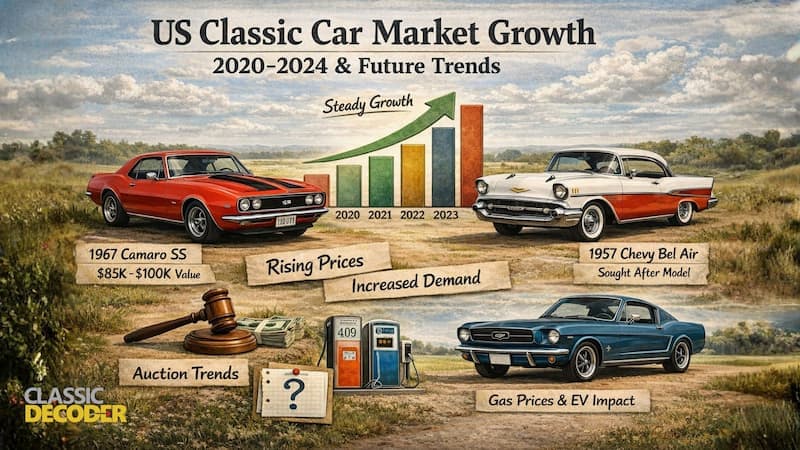
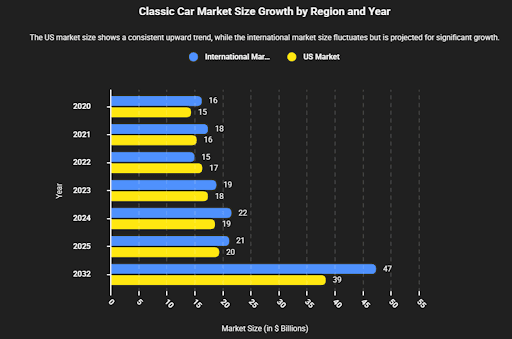
The American classic car market size expanded in unbelievable ways between 2020 and 2024. The market was approximately $14 billion in 2020 and rose to more than $12.6 billion in 2024. Analysts estimate that it will be almost $26 billion in 2032.
In this article, you will find out the numbers, trends, and significant facts of how the classic car market has evolved and where it is moving to next.
Key Takeaways
- The US classic car market only increased to $12.6 billion in the year 2024, compared to about $14 billion in 2020, and it is projected to grow by $26 billion by 2032.
- Gen Z consumers are transforming the industry, with the generation taking almost 10% of the market today, favoring the 1980s and 1990s modern classic products.
- As of 2024, online auctions outpaced live auctions, with a margin of $34 million, all of which changed the very trend of purchasing classic cars.
The Classic Car Market: What You Need to Know
What is special about the classic car market before we take a look at the numbers? This is not like purchasing ordinary cars since the vehicles have a history and value that appreciates with time.
What Makes a Car "Classic"?
Not all old cars are classic cars. The majority of the experts state that a car must be at least 20-30 years old to be considered a classic car. Certain vehicles are even termed as antique when they are over 45 years old.
The classic car market comprises muscle, sports, and even some special cars of the 1960s and 1970s, 1980s and 1990s, and even early 2000s.
Popular vintage cars consist of the Ford Mustang, Chevrolet Camaro, Porsche 911, and Lamborghini Countach. All these cars have a story behind them from when they were manufactured. They are designed in a special manner, possessing strong engines or having cool features that people desire to have today.
Why People Buy Classic Cars
Classic cars are acquired by people due to very numerous reasons.
Good Investment
Some buyers viewed them as good investments that can fetch them more money in the future. Indeed, numerous vintage cars have increased in value by 8% to 10% annually.
Physical Appeal
Some purchase classic cars due to their passion for the appearance and feel when they are on the road. Such vehicles remind them of their childhood or their favorite films.
The hobby of collecting classic cars is growing. A lot of individuals use their time to repair/restore old cars, attend car shows, and connect with other enthusiasts. People having an emotional attachment towards these vehicles is equally significant as how much money they would get out of them.
US Classic Car Market Size Growth (2020-2024)
The classic car market has been thrilling in the last few years. We will have a look at how the market has expanded and what the figures say.
Classic Car Market Value in 2020
The 2020 US classic market value was estimated at between $14 billion to $15 billion. This happened in a very hard period due to the COVID-19 pandemic. Numerous car exhibitions and auctions were forced to end or go online. Despite such issues, individuals continued to purchase and sell old cars.
The pandemic made certain individuals think more about investing in what they could possess and have fun with. The market remained robust since the collectors and car lovers had new means of purchasing cars.
The popularity of the online auctions assisted individuals in purchasing the classic cars from the comfort of their homes.
Growth Through 2024
The US classic car market had also been reported to have increased to $12.6 billion by 2024. The market is expanding at an average of 8.82% per year between 2020 and 2024. This increase was possible due to the presence of more money with people who considered classic cars as excellent investments.
A number of factors contributed to the expansion of the market, including:
- An increasing number of young people are beginning to purchase classic cars.
- Online purchasing means that any person can enter the market.
- Individuals started viewing classic cars as a form of saving money to be used later in life, just as stock buys or gold.
Regional Performance
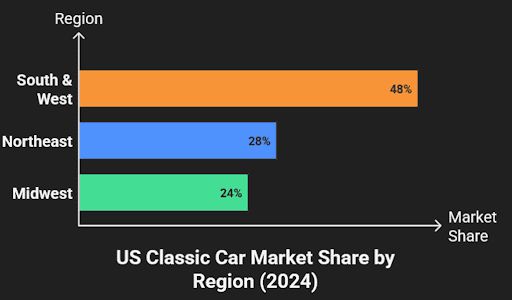
The interest in classic cars varied in various US regions. The South and West dominated the market with 48% of the total classic car sales. The weather in these areas is favorable, and this makes maintenance of cars quite easy. There was lots of activity in auctions in states such as California, Texas, and Florida.
The northeast region was holding 28% of the market. There are numerous rich collectors and powerful car clubs in these locations. Metropolitan cities such as New York and Boston organize big annual car shows.
The Midwest region had 24% market share. Interest also remains high with states such as Michigan. The South and West expanded most of all since they have more garage space, better weather to keep the cars, and huge auctions with buyers all around the nation.
Current Classic Car Market Trends (2024-2025)
The classic car market trends never stay the same. The trends present us with what the customers desire and how they prefer to buy vintage cars.
Online Auctions Take Over
Something big happened in 2024. Online classic car auctions have sold more cars than the live auctions, as it has never happened before. Online sales amounted to $2.5 billion, a difference of $34 million compared to the sales of online live auctions.
This 12% increase in online sales demonstrates the level of comfort people have with regard to purchasing expensive cars online. Buyers could easily view photos, , and make a bid at any location through websites such as Bring a Trailer and Hemmings.
It enabled people to purchase classic cars sitting at home in their pajamas. This shift saw more individuals join the classic car market who would have otherwise been unable to commute to large auction houses.
Changing Buyer Demographics
Youths are transforming the classic car market. The Gen Z buyers of classic car insurance, born after 1996, has increased to almost 10% of all quotes. When you include the Millennials to that figure, the young consumers under 40 years constitute 30% of the market. This is higher than 21% four years back.
These youthful consumers desire other kinds of cars as compared to their parents. They are more concerned with cars between the 1980s and 1990s and the early 2000s.
These are the vehicles they watched in video games, movies, and television programs when they were younger. They also prefer to shop for cars online and conduct research on social media.
Modern Classics Gaining Popularity
The 1980s and 1990s cars are in demand today. To follow these so-called modern classics, Hagerty developed a program named the RADIndex. This index increased by 2% in early 2025, which demonstrates that individuals demand such newer classics.
The values of cars such as the Porsche 944, Honda NSX and Volkswagen GTI have increased by 24% or higher in a single year.
The RADindex follows 21 different cars of this period. In general, the value of these cars has increased by 230% since 2014. That is even better than the stock market in other years.
Traditional Classics Facing Challenges
As modern classics are performing well, some older classics are not doing so well. The values of muscle cars of the 1960s and 1970s fell by 10% versus last year. Ferrari classes also declined by 9%. This does not imply that these cars are useless, but means the market is evolving due to younger customers.
The decline occurred due to the fact that fewer individuals recall these cars when they were new. The kids who are still in their collecting phase do not feel the same attachment that their parents felt towards the 1960s Mustang. Instead, they are purchasing newer models of the cars they grew up admiring.
Global Classic Cars Market Overview
The US belongs to a larger global classic car market. When we look at the global figures, we can easily know where America fits in the picture.
Worldwide Market Size
The global classic car market was valued at between $39.7 and $43 billion in 2024. The United States has the largest portion of this total market, estimated between 38% and 45%. This makes the US the largest classic car market globally.
The market of classic cars in North America is the best, and Europe is second, with a good classic car market size of approximately 32% of the global market. Germany, Italy, and the United Kingdom are some of the countries that have well-known brands of cars that have a rich history.
People in China, Japan, and India are also increasingly becoming interested in the collection of classic cars, making the Asia-Pacific region develop rapidly.
International Market Trends
There are other nations that are beginning to adore classic cars like Americans. Asian collectors with money are purchasing rare European and American classics. Certain classic car shows in Japan draw thousands who wish to view old cars.
Europe remains resilient due to its heritage of cars. European brands such as Ferrari, Porsche, Mercedes-Benz, and Jaguar were the result of that and are a pride in collection in Europe.
In America, some buyers import European classics, whereas European collectors purchase American muscle cars. This two-way purchase keeps the global market on the go.
The US Classic Car Market Projections
What is the future of the classic car market? Here is a glance at the projections of the next few years by analysts.
Market Size Forecast to 2032
By the year 2032, the US classic car market is projected to be at $25.99 billion. This is more than twice what it would be worth in 2024. The market is expected to continue expanding at an average pace of 8.82 per annum. In the meantime, the worldwide market is expected to reach $77.8 billion in 2032.
Those figures demonstrate that the popularity of vintage vehicles is not declining. The option of more individuals in the world becoming wealthy will mean that they will have cash at their disposal to engage in hobbies and investments such as classic cars.
Factors Driving Future Growth
The classic car market will continue to grow with several factors. These include:
More Cash Flow
The individuals have increased money to use on activities they love. People feel free to spend money on costly hobbies when the economy is performing well.
Online Purchase
It is now easier to purchase classic cars than ever through the internet and digital tools. It is possible to research the prices of cars, read reviews, watch videos, and purchase cars without going outside.
Good Investment
Classic cars are perceived as smart investments by more people. They do not simply take all their money and invest it in stocks but allocate it to other things that they can enjoy, such as classic cars.
Old Car Modification to EVs
Some individuals are converting old cars to electric cars. The new trend could attract people who are environmentally conscious yet amateurs in the vintage car appearance. By turning old cars into battery-powered ones, a brand new market would be formed.
Classic Car Investment: Why Classic Vehicle History Report Matters
It is extremely important to know the history of a classic car before purchasing it. This plays a significant role in determining the value of that vehicle and whether the vehicle is original.
Knowing the history of a classic car will guide you not to purchase a vehicle that has gone through severe accidents or a counterfeit one. It also makes you know whether the car is really rare or there are many others similar to it.
The better informed you are about the history of the car, the better judgment you can make regarding the purchase of the car.
How Classic Decoder Helps
Classic Car Decoder provides a variety of services that allow easy research to collectors and buyers who need to know every detail about their classic car. Their classic vehicle history report provides you with valuable details of the car specifications and history.
You can view title brands, lien and loan records, theft records, mileage records, accident records, and even auction records with pictures. This makes you feel assured that you are purchasing a well-maintained car.
Enhance Your Knowledge with the Classic Car Build Sheet
Classic Car Decoder also provides classic car build sheets that are very helpful for restoration projects.
The build sheet includes engine specs, standard and optional equipment, capacities, the original base price, system specifications, interior and exterior color, transmission details, dimensions, wheels, rims, and tire information.
Having all this information in one place makes it easier to restore a classic car to exactly how it looked when it first rolled off the assembly line.
Challenges Facing the Classic Car Market
Even though the classic car market size is growing, it faces some problems that could slow it down.
Economic Factors
Classic cars can be expensive to buy and even more expensive to fix. When the economy struggles, people have less money to spend on hobbies. Inflation can make restoration costs go up, and that might stop some people from buying classic cars.
Difficulty in Finding Genuine Parts
Many classic car parts aren't made anymore, so collectors have to search junkyards, online marketplaces, or pay high prices for rare pieces. Some companies make reproduction parts, but purists want original parts, which can cost thousands of dollars.
Generational Shifts
As older collectors age out of the hobby, younger buyers are coming in with different tastes. This shift means some classic cars that were once valuable might not be worth as much anymore. The challenge is attracting younger people while keeping the hobby exciting.
Also, young collectors also have different values. They care more about sustainability and technology. The classic car market will need to adapt by offering electric conversions, better online experiences, and cars that match what younger people love.
Conclusion on the Classic Car Market Size & Growth
The US classic car market has shown incredible growth from 2020 to 2024, going from $14 billion to $12.6 billion and heading toward $26 billion by 2032. The market is changing as younger buyers enter the scene, online auctions become the norm, and modern classics from the 1980s and 1990s gain popularity.
With global classic cars valued at nearly $40 billion in 2024 and expected to reach $77.8 billion by 2032, the future looks bright for car collectors and enthusiasts. The South and West regions of America lead the market, and Gen Z buyers are making their mark with nearly 10% of insurance quotes.
![Best Cars for Uber and Lyft Drivers [Test]](/_next/image?url=https%3A%2F%2Fvhr.nyc3.digitaloceanspaces.com%2Fpayload%2Fassets%2Fsection-3-image.webp&w=1920&q=75)